2026 Top Bench Furniture Manufacturers for Global Buyers

A bench looks simple until it has to serve a crowded station, a hotel lobby, or a public garden through years of daily use. Buyers comparing 2026 manufacturers need more than polished product photos. They need evidence of material quality, production capacity, customization options, lead times, and dependable after-sales support. Small details matter.

The wider furniture market offers useful context, though it is not a bench-specific forecast. IMARC Group’s Global Furniture Market report estimated the market at US$739.4 billion in 2023 and projected US$1,015.3 billion by 2032. That scale signals broad industry demand, but it does not prove that every supplier can meet a buyer’s specifications. Verify the details. Ask how timber is sourced, how metal finishes withstand outdoor exposure, and whether samples match production units.

Charles Eames, the influential furniture designer, captured a principle relevant to bench furniture: “The details are not the details. They make the design.” For global buyers, those details include joinery, edge finishing, load performance, packaging, and replacement-part availability. A low quote can still carry hidden costs. No shortlist removes every compromise. This guide compares leading bench furniture manufacturers through practical sourcing criteria, helping buyers identify suppliers suited to their market, project scale, and intended use. The comparison is a starting point, not a guarantee; confirm specifications and delivery terms directly with each manufacturer.
2026 Top Bench Furniture Manufacturers for Global Buyers

What Bench Furniture Includes and How It Is Used

Bench furniture includes freestanding seats designed for one or more people, with or without backs, arms, cushions, or storage. Common types range from narrow entryway benches to upholstered bedroom seats and sturdy outdoor models. Some have lift-up lids for shoes or linens. Others offer a simple plank seat and open legs. The right form depends on the setting. Fit matters. In a dining area, a bench can tuck under the table and make room for extra guests. Near a doorway, it gives people a place to sit while putting on shoes. On a patio, weather-resistant materials and drainage details matter more than soft upholstery. Small design choices affect daily use.

For global buyers, clear specifications help distinguish one bench from another. Check overall length, seat height, depth, weight capacity, and whether assembly is required. Materials need context: solid wood, metal, engineered panels, and outdoor fabrics each suit different conditions and maintenance routines. Ask how joints are secured and how finishes are tested for ordinary wear. A smooth-looking surface is not proof of long-term durability. The category can be confusing, especially when product descriptions use “bench” for very different constructions. I would not assume a storage bench is comfortable for long seating, either. Reviewing dimensions, construction details, and intended use together makes comparisons more dependable.

2026 Top Bench Furniture Manufacturers for Global Buyers — What Bench Furniture Includes and How It Is Used

Bench furniture includes seating for dining areas, entryways, outdoor spaces, and locker rooms. The chart compares typical seat-height ranges for these uses. These are common design ranges, not universal standards; dimensions vary by product and intended users.

Seat height is one factor in comfort and accessibility. Buyers should also consider seat depth, back support, materials, weather exposure, and the space where the bench will be used.

How to Assess Bench Furniture Manufacturers in 2026

Assess a bench furniture manufacturer by checking what happens beyond the showroom. Request a bill of materials, production tolerances, and inspection records for the exact model you plan to order. Ask how the maker controls timber moisture, weld consistency, and coating thickness. For upholstered benches, inspect seam alignment and fabric specifications. Small details matter.

Request strength and durability evidence that matches the bench’s intended use. ISO 7173:2023 describes test methods for seating strength and durability; ask for the tested configuration, load cycles, and sample identification. A certificate without traceable test details tells you little. Test the joints. Check for rocking on a level floor, sharp edges, and uneven feet. A sample can look excellent while concealing production variation, so compare samples with finished goods where possible.

Delivery reliability also deserves scrutiny. The World Bank’s 2023 Logistics Performance Index assesses 139 economies across six logistics dimensions, including timeliness and tracking. Use it as context, not as a substitute for factory-level evidence: a country score cannot predict one supplier’s performance. Ask for recent on-time shipment records, packaging photos, and a clear process for handling defects. A polished factory tour is useful, but it is only a snapshot. I would still verify claims against dated records and a repeat order.

Leading Bench Furniture Manufacturers for Global Buyers

Leading bench furniture manufacturers for global buyers must offer more than attractive catalog images. Buyers should examine frame materials, joint design, finish consistency, and replacement-part availability. Grand View Research valued the global furniture market at USD 736.57 billion in 2023 and projected a 5.3% compound annual growth rate from 2024 to 2030. This broad market figure is not bench-specific, but it signals growing competition and varied sourcing options.

Request measurable evidence. Ask for load-test results, material specifications, and inspection records for each production batch. For a public-space bench, inspect welds, edge finishing, and drainage details; small flaws can become costly outdoors. Confirm packaging dimensions and trial-shipment protection, too. Scratched legs arrive more often than buyers expect. A supplier’s sample should match the intended production finish, not merely look close under showroom lights.

Global buyers should also clarify lead times, minimum order quantities, and quality checks in writing. Where timber is used, request documented sourcing information; where metal is used, check coating thickness and corrosion-test methods. These details help compare offers fairly. Yet specifications are not always directly comparable across factories, and paperwork can miss workmanship problems. An independent pre-shipment inspection may be worthwhile, even when it adds time and expense.

Comparing Materials, Production Capacity, and Customization

A bench for a busy café faces different demands from one in a hotel lobby. Solid hardwood can be repaired and refinished, while steel frames often provide firm support with less visual bulk. Outdoor use needs closer scrutiny. Ask how joints are sealed, how finishes handle moisture, and whether replacement parts are available. Material labels alone tell little; grade, thickness, and joinery matter.

Production capacity is more than a monthly output figure. Request a realistic lead time, sample approval schedule, and packaging details for the route your goods will travel. If a manufacturer quotes high volumes but cannot explain inspection steps, treat the number cautiously. Small runs can reveal more. Pilot orders may expose uneven staining, wobble, or packaging damage before a larger commitment.

Customization may include seat length, upholstery, finish tone, or discreet logo placement. Each change can affect tooling, cost, and delivery, so request drawings and approve a physical sample before production. A practical inspection checks stability, edges, and finish consistency. It is easy to overvalue a polished showroom sample; it rarely shows how a bench performs after months of daily use. Planning for that gap takes time, but ignoring it can be costly.

2026 Top Bench Furniture Manufacturers for Global Buyers - Comparing Materials, Production Capacity, and Customization

Supplier Profile Typical Bench Type Common Materials Production Capacity Customization Options Best-Fit Applications Buyer Verification Points
Solid-Wood Workshop Indoor dining, entryway, and occasional benches Hardwood or softwood lumber; water-based or other specified finishes Varies by workshop, equipment, and order mix; request a documented monthly output and current lead time. Length, leg design, edge profile, wood species, finish color, and upholstery Residential interiors, hospitality interiors, and made-to-order furniture programs Confirm wood species, moisture-control process, finish specification, joint construction, and sample approval procedure.
Panel-Furniture Producer Storage benches and flat-pack seating Particleboard, MDF, plywood, veneer, and laminate, depending on specification Often suited to repeatable batch production; actual throughput depends on line configuration and product complexity. Panel dimensions, laminate or veneer selection, hardware, colors, packaging, and assembly design Retail assortments, online furniture, and space-saving home storage Specify panel grade and thickness, edge banding, hardware, assembly instructions, and applicable emissions requirements.
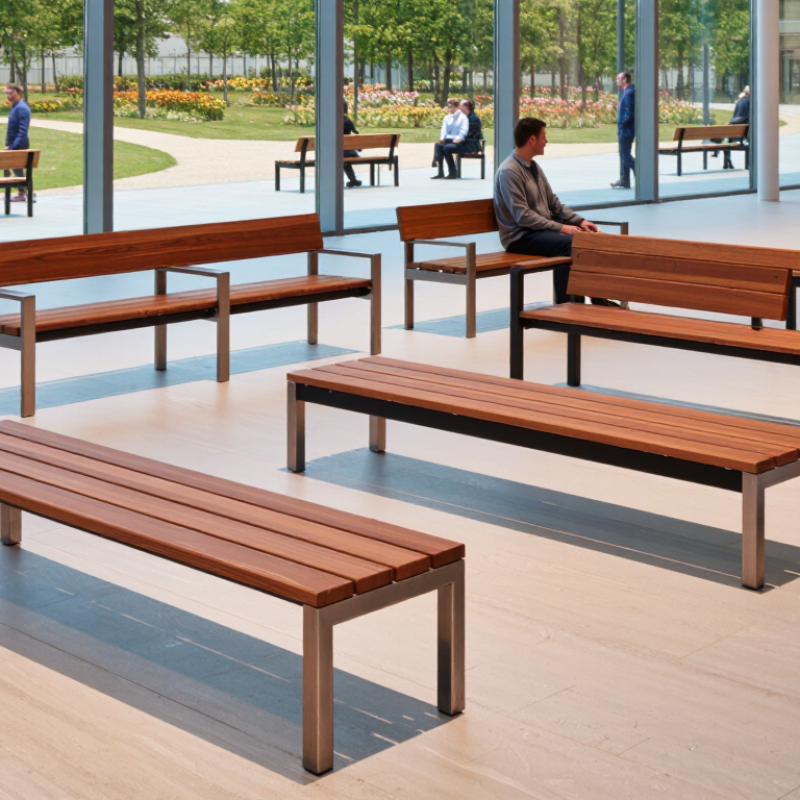
Metal-Fabrication Specialist Industrial, commercial, and outdoor benches Steel or aluminum frames; powder-coated or other specified finishes; optional wood or composite slats Capacity is project- and tooling-dependent; obtain confirmed quantities per production run and a written delivery schedule. Frame dimensions, finish color, mounting method, slat material, and component layout Public spaces, workplaces, education, and commercial environments Request material and coating specifications, corrosion-resistance test details where required, weld inspection criteria, and load-test evidence.
Outdoor-Furniture Producer Garden, patio, and public-realm benches Teak or other wood, aluminum, steel, recycled plastic, and outdoor-rated composites Seasonality and material availability can affect output; verify peak-season capacity and replenishment lead times. Dimensions, finish, color, backrest, armrests, fixings, and branding-free packaging options Residential outdoor spaces, resorts, parks, and other exterior settings Check care instructions, UV and weathering claims, drainage design, fastener material, and any relevant safety or durability test reports.
Upholstered-Seating Manufacturer Entryway, bedroom, and hospitality benches Timber or engineered-wood frames, foam, fabric, leather, or synthetic upholstery materials Depends on upholstery-line staffing, fabric availability, and SKU mix; request capacity by model and upholstery option. Seat length, foam specification, fabric selection, stitching, legs, and finish Hotels, residential interiors, and contract furniture projects Confirm fabric composition and performance data, foam specification, seam details, cleaning guidance, and applicable fire-safety requirements.
Contract-Furniture Manufacturer High-use benches for commercial projects Specified combinations of timber, metal, panels, upholstery, and commercial-grade finishes Usually quoted against project quantities and schedules; request available capacity, sample timing, and delivery milestones in writing. Project dimensions, finish schedules, material combinations, installation details, and coordinated product ranges Offices, healthcare, education, hospitality, and other contract environments Review project references, quality-control documentation, packaging and installation plans, warranty terms, and required compliance evidence.
Comparison note: These are supplier profile categories, not named or ranked companies. Production capacity is not a universal benchmark and cannot be verified without supplier-specific records; request current, model-level figures, lead times, and supporting documentation before placing an order. Material suitability and regulatory requirements depend on the product, market, and intended use.

How to Verify Suppliers and Plan International Purchasing

For global bench-furniture purchasing, verify the factory behind the quotation. Request a current business registration, production address, and references for comparable export orders. Ask for dated photos or a live video tour showing the workshop, timber storage, finishing area, and packing station. Then compare the sample with the approved drawings, materials, dimensions, and finish. A polished sample proves little about batch consistency.

Use independent inspections before production and before shipment. Check joinery, stability, surface defects, moisture readings, and carton protection against written acceptance criteria. The World Bank’s 2023 Logistics Performance Index assessed 139 economies across customs, infrastructure, shipment arrangements, logistics services, tracking, and timeliness. Use these indicators to discuss route risks, but confirm actual transit times with forwarders. The WTO’s October 2024 outlook projected merchandise trade volume growth of 2.7% in 2024 and 3.0% in 2025; forecasts can shift, so avoid building plans around one sailing date. A clean audit is not a guarantee.

Tips: Put specifications, inspection rights, delivery terms, payment milestones, and remedies for defects in the purchase agreement. Request a pre-shipment inspection report and photos of sealed cartons. Allow buffer time for port delays and rework. Small omissions matter.

Pin It on Pinterest

Share This