
7 Best Bar Height Sofa Legs for Global Buyers?

Choosing Bar Height Sofa Legs is not simply a matter of adding extra inches. The wrong leg can make a sofa unstable, visually awkward, or uncomfortable for everyday seating. This guide examines seven practical options for global buyers, including adjustable steel legs, solid wood designs, heavy-duty casters, and minimalist tapered models.

Furniture hardware consultant Elena Marquez explains, “A taller sofa must balance seat comfort, frame strength, and the room’s visual scale.” That principle matters across different markets. A 10-centimeter height change can affect knee angle, table alignment, and access for older users. Thread size, mounting plates, weight ratings, and corrosion resistance also deserve careful attention. Small details matter.

Real-world purchasing brings complications. A leg may look elegant online but arrive with incompatible screws. Powder-coated steel can perform well in humid rooms, yet damaged coating may expose the metal. Wood legs offer warmth, although uneven floors can reveal small height differences. These imperfections are easy to overlook.

The seven selections in this article are assessed through practical criteria: stability, material quality, installation effort, finish durability, shipping suitability, and long-term value. Product availability may vary between North America, Europe, Asia, and other regions. Buyers should verify dimensions before ordering. A beautiful leg is not automatically a safe leg. Careful measurement remains essential, especially when converting a standard sofa into a bar-height seating arrangement.
7 Best Bar Height Sofa Legs for Global Buyers?

Understanding Bar-Height Sofa Legs and Their Applications

Bar-height sofa legs raise a sofa seat far above the usual lounge position. Standard sofas often sit 17 to 20 inches from the floor, while bar-height seating may approach 40 to 42 inches overall. This change affects comfort, balance, and table alignment. The term can be confusing. Some sellers use it for legs that create counter-height seating instead. Buyers should check the finished seat height, not only the leg length.

These legs suit hospitality spaces, compact dining areas, kitchen islands, and high worktables. They can turn a deep sofa into a more upright perch, especially where floor space is limited. However, a taller sofa is not automatically more useful. A low frame may flex under increased leverage, and children or older users may find climbing difficult. Measure from the floor to the compressed cushion, then compare that height with the table surface.

Strong steel or reinforced hardwood legs usually provide dependable support when properly mounted. Check the mounting plate, screw pattern, thread size, and stated load rating. Metric and imperial fittings are not always interchangeable. Global buyers should also confirm corrosion resistance for humid rooms and uneven-floor compatibility. A wide foot can reduce rocking, but it may catch toes. I would test every replacement on a firm surface before regular use. Small installation errors matter more at greater heights.

Key Factors for Comparing Sofa Leg Height, Strength, and Materials

Choosing bar-height sofa legs requires more than adding extra inches. Measure from the floor to the finished seat, including cushion compression. For many elevated sofas, 6–10 inch legs create a seat height near 20–24 inches. Taller legs may improve cleaning access, but they can make deep sofas feel unstable. Check the leg angle and mounting plate carefully.

Strength depends on the complete connection, not the leg alone. Steel usually offers high load resistance, while solid hardwood can provide excellent rigidity with a warmer appearance. Aluminum is lighter, but thin sections may bend under repeated side loads. ANSI/BIFMA seating protocols include demanding durability testing, including repeated loading cycles for commercial seating. EN 12520 also evaluates domestic seating strength and durability. These standards guide comparison, but they do not replace product-specific test reports.

Thread size matters. So does plate thickness. A wide mounting plate spreads force across the sofa frame and reduces local tearing. For global buyers, confirm tested load capacity, corrosion protection, fastener length, and compatibility with the frame material. A 2024 furniture industry outlook from Grand View Research identifies durability and material performance as continuing purchase considerations. Still, market data cannot prove one leg is safer. A taller design may look refined, yet become noisy on uneven floors. I would test a sample under shifting loads before approving bulk production. Some specifications remain incomplete. That deserves attention.

Seven Recommended Bar-Height Sofa Leg Styles for Global Buyers

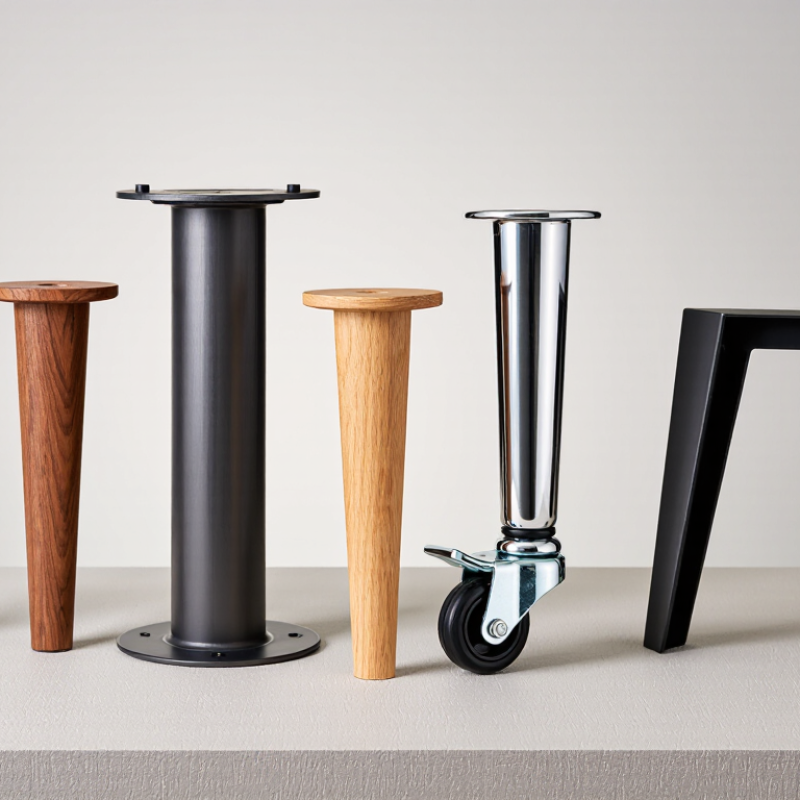
Seven recommended bar-height sofa leg styles can suit different interiors and shipping conditions. Tapered wood legs add warmth and fit modern living rooms. Square metal legs offer firm support and clean lines. Flared steel legs create a wider stance for heavier sofas. Hairpin legs provide a light, industrial appearance. Round aluminum legs resist surface moisture and reduce visual weight. Adjustable threaded legs help correct uneven floors. Block pedestal legs deliver a strong, grounded look for large seating.

In furniture fitting work, I check the sofa frame before selecting any leg. Confirm the mounting plate, screw pattern, load rating, and finished height. A beautiful leg can still wobble. That detail is often missed.

Tips: Measure from the floor to the seat before ordering. Include the cushion thickness. Choose corrosion-resistant finishes for humid regions. For international purchases, request precise drawings, material details, packaging dimensions, and replacement hardware information. Imperial and metric measurements can cause small but costly errors, so confirm both. Adjustable feet are useful, but they may look less refined when extended too far. I once underestimated floor unevenness, and the sofa needed extra leveling work. The lesson is simple: test stability on the actual floor surface. Also inspect the frame strength, because taller legs increase leverage and may expose weak joints.

7 Best Bar-Height Sofa Legs for Global Buyers

The chart compares typical leg-height ranges commonly specified for bar-height sofa and elevated seating applications. Adjustable legs provide the broadest height range, while pedestal and hairpin styles are generally more compact. Buyers should confirm thread size, mounting plate dimensions, weight capacity, floor clearance, and local seating-height requirements before ordering.

How to Match Sofa Legs With Frames, Seats, and Interior Designs

7 Best Bar Height Sofa Legs for Global Buyers?

Choosing bar height sofa legs is not only a style decision. It changes the sofa’s posture, seat height, and daily comfort. Measure the existing frame before ordering. Record the leg plate, screw position, and load-bearing points. A strong frame needs evenly distributed support, not simply taller feet. In my fitting experience, a 20-millimeter error caused rocking on a hard floor. Small details matter.

Match the legs with the seat’s total height, including the cushion. Measure from the floor to the frame, then add the leg length and compressed cushion thickness. A raised sofa should still support relaxed knees and stable feet. Metal legs suit slim, structured frames, while solid wood legs feel warmer under thick cushions. Wide feet can protect soft flooring, but narrow feet may look cleaner. I once chose a stylish narrow design that pressed into a wood floor. It looked right, but performed poorly.

Interior design should guide the finish and shape. Use dark legs with deep upholstery for a grounded, modern room. Light wood can soften a compact space with pale walls. For industrial interiors, angled legs may echo exposed shelving and hard surfaces. In traditional rooms, tapered legs usually connect better with framed arms. Check the sofa’s visual weight from every angle. My own mistake was matching color too closely; the legs disappeared instead of defining the furniture. A small contrast often works better. Keep installation practical, too. Confirm thread size, floor clearance, and replacement access before fitting.

International Buying, Installation, and Safety Considerations

7 Best Bar Height Sofa Legs for Global Buyers?

International buyers should compare more than appearance when choosing bar height sofa legs. The best options usually offer strong steel or hardwood construction, stable mounting plates, adjustable height, and replaceable hardware. Measure the sofa frame, seat cushion, and finished floor height in millimeters. Imperial measurements can create small errors. Those errors matter.

Check the thread size, bolt length, and load rating before ordering. A leg made for a light lounge chair may fail under a deep sofa. Ask the supplier for tested capacity, material details, packaging dimensions, and spare screws. Confirm whether the fixing holes match your frame. Delivery damage is common, so photograph the package before opening it. Customs delays can also separate the legs from replacement parts.

Installation needs patience. Use a level surface, tighten bolts evenly, and add locking washers where recommended. Do not force mismatched threads. After installation, press each corner firmly and check for movement. Sit down slowly, then test the sofa from different angles. Floor protectors help prevent scratches, especially on tile or polished wood. A tall sofa changes the center of gravity. It may feel comfortable but still become unstable on an uneven floor. That is an easy detail to miss. Recheck the legs after several days, because wood frames can settle and hardware may loosen.

7 Best Bar Height Sofa Legs for Global Buyers? - International Buying, Installation, and Safety Considerations

Leg Type Typical Height Common Materials Mounting Method Best Use International Buying Considerations Installation and Safety Notes
1. Tapered Solid-Wood Legs 150–250 mm
(5.9–9.8 in)
Beech, maple, ash, or other kiln-dried hardwood Metric hanger bolt, imperial hanger bolt, or top plate Traditional sofas, upholstered benches, and residential seating Confirm wood species, moisture control, finish, thread standard, and fumigation or wood-treatment documentation where required by the destination country. Install into a structurally sound frame, not only thin upholstery panels. Pre-drill hardwood to reduce splitting and use a leveler or protective pad on hard floors.
2. Powder-Coated Steel Square Legs 100–200 mm
(3.9–7.9 in)
Welded carbon steel with powder coating Four-hole or multi-hole mounting plate Modern sofas, commercial benches, and heavier seating frames Request tube-wall thickness, weld inspection details, coating specification, corrosion test information, and packaged dimensions for freight calculation. Use all specified fasteners and tighten them evenly. Check that the mounting plate fully contacts the frame and inspect welds for cracks or sharp edges before use.
3. Hairpin Steel Legs 150–300 mm
(5.9–11.8 in)
Steel rod, commonly 9–12 mm diameter, with painted or powder-coated finish Top plate with wood screws or machine screws Light-to-medium residential sofas, benches, and design-led furniture Verify rod diameter, leg spread, plate size, finish durability, and whether the supplied screws match the frame material. Use four legs with sufficient spacing and add a center support for long or heavily loaded sofas when recommended by the furniture engineer. Fit non-slip floor protectors.
4. Adjustable Threaded Legs 100–250 mm
(3.9–9.8 in), depending on model
Steel threaded stud with zinc-plated or coated body; plastic or metal foot Threaded insert, T-nut, or mounting plate Uneven floors, modular seating, and export furniture requiring height correction Specify thread size separately: M8 and M10 are metric; 5/16-18 and 3/8-16 are common imperial alternatives. Confirm pitch, thread length, adjustment range, and load rating. Keep enough thread engagement after adjustment and lock the jam nut where provided. Never exceed the supplier’s tested load rating or use adjustment to compensate for a weak frame.
5. Wide-Plate Straight Steel Legs 100–200 mm
(3.9–7.9 in)
Formed or tubular steel with powder coating, painted finish, or plating Large top plate or concealed bracket High-contact seating, contract benches, and sofas requiring improved lateral stability Compare plate dimensions, hole pattern, fastener quantity, total packed weight, and corrosion protection for humid or coastal destinations. A wider plate can distribute force more effectively, but the furniture frame must still be reinforced. Tighten fasteners after initial use and inspect periodically.
6. Angled or Splayed Metal Legs 120–250 mm
(4.7–9.8 in)
Steel or aluminum; powder-coated, anodized, or painted Top plate, corner bracket, or bolt-through fitting Contemporary sofas where a wider footprint and visual clearance are desired Confirm the angle, left/right orientation if applicable, finished height, footprint, and whether metric or imperial hardware is included. Install legs symmetrically. Check clearance from the frame edge, prevent rocking on the floor, and verify stability against forward and sideways loading.
7. Central Pedestal or Double-Support Legs 100–250 mm
(3.9–9.8 in)
Steel, stainless steel, or aluminum with a welded base or reinforced bracket Central plate, crossbar, or multiple frame attachment points Long sofas, corner units, modular seating, and designs needing unobstructed outer corners Request structural drawings, center-to-center dimensions, base footprint, corrosion grade, and tested load data for the complete leg-and-frame assembly. A center support does not replace perimeter supports unless the frame is designed for it. Anchor every required contact point and check for tipping, twisting, and floor damage.
Buyer and safety checklist: “Bar height” is not a universal sofa-leg measurement. Select the finished seat height based on the furniture design and user requirements; typical counter seating is approximately 610–660 mm (24–26 in) high, while bar seating is approximately 710–760 mm (28–30 in) high. Confirm the required seat height after adding the cushion. Ask for material specifications, dimensions, thread standards, installation hardware, tested load information, packaging details, and destination-country import requirements. The leg rating should be evaluated together with the sofa frame, fasteners, floor, and intended occupancy.

Pin It on Pinterest

Share This