
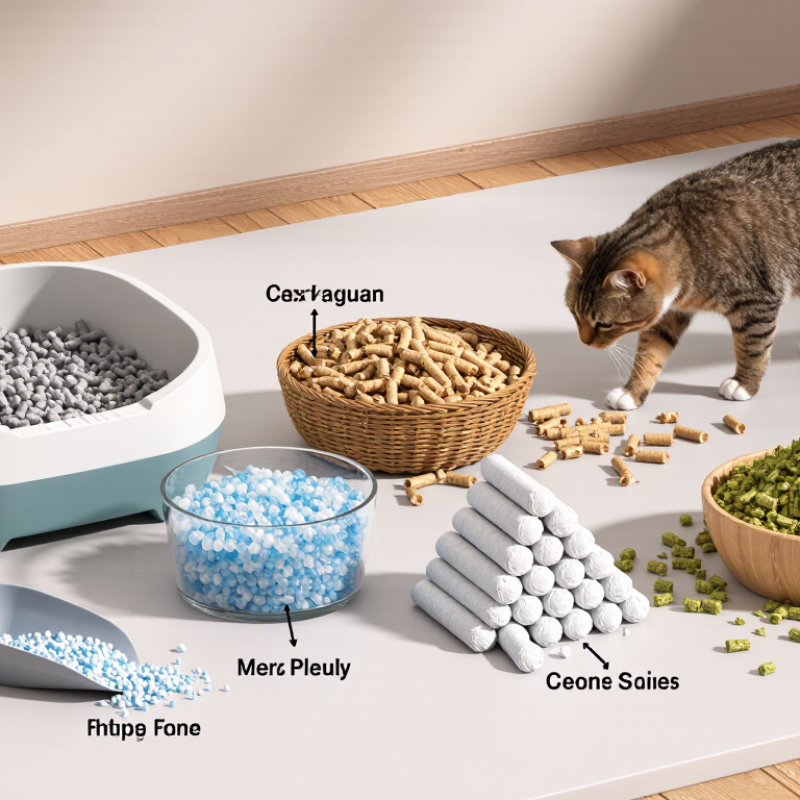
Cat litter sand is a loose material placed in a tray to absorb urine, control odor, and support natural digging.
It is not usually beach sand. Common types include clay, silica crystals, recycled paper, wood, and plant fibers. Clumping clay forms firm balls when liquid touches it, making removal easier. Non-clumping clay absorbs moisture but usually needs more frequent replacement. Silica crystals trap liquid inside tiny pores, while plant-based litter relies on absorbent fibers or pellets.
The American Pet Products Association’s 2023–2024 National Pet Owners Survey reported 46.5 million U.S. households owned cats.
That scale makes litter choice a daily welfare issue, not a minor shopping decision. Veterinary guidance generally favors unscented, low-dust litter because strong perfumes may discourage some cats. In practice, texture matters too. A cat may reject rough pellets but accept soft, sand-like granules. No type is perfect. Clumping litter can track across floors, and crystal litter may feel unfamiliar under sensitive paws.
Tips:
Place the tray in a quiet, accessible area. Remove waste daily, and wash the tray with mild soap. Change gradually when switching textures. Watch for coughing, sneezing, or sudden avoidance. These signs can reflect dust, fragrance, stress, or a medical problem.
The 2024 AAFP/ISFM Cat Friendly Veterinary Environment Guidelines also support clean, private litter areas. One detail owners often miss: a deep, dirty tray can punish the cat for using it, even when the litter itself is suitable.