
Choosing a Pool Leaf Vacuum in 2026 requires more than comparing suction power and price. The right model must match your pool’s surface, debris load, water depth, and cleaning routine. A lightweight vacuum may handle a few maple leaves, but it can struggle with wet pine needles after a storm. A powerful model may clean faster, yet it can drain batteries quickly or disturb settled debris.
Industry data supports a careful approach. The Pool & Hot Tub Alliance’s industry reports continue to show a large and active residential pool market, with maintenance remaining a major ownership cost. The U.S. Environmental Protection Agency’s WaterSense guidance also emphasizes reducing avoidable water waste during pool care. That matters because careless vacuuming can send treated water into waste lines. Small losses become expensive over a long season.
Look beyond marketing claims. Check the vacuum head width, hose reach, filtration method, battery runtime, replacement-part availability, and warranty terms. Robotic models may suit owners who want scheduled cleaning. Manual or rechargeable units can offer better control around steps, drains, and narrow corners. Not every “high-power” claim is meaningful. Some specifications use different testing conditions, which makes direct comparisons imperfect.
This guide examines practical performance, operating costs, safety, and long-term reliability. It also questions common assumptions, because the cheapest Pool Leaf Vacuum is rarely the cheapest tool to own. Test the debris basket. Inspect the seals. Consider your real pool, not a showroom example.
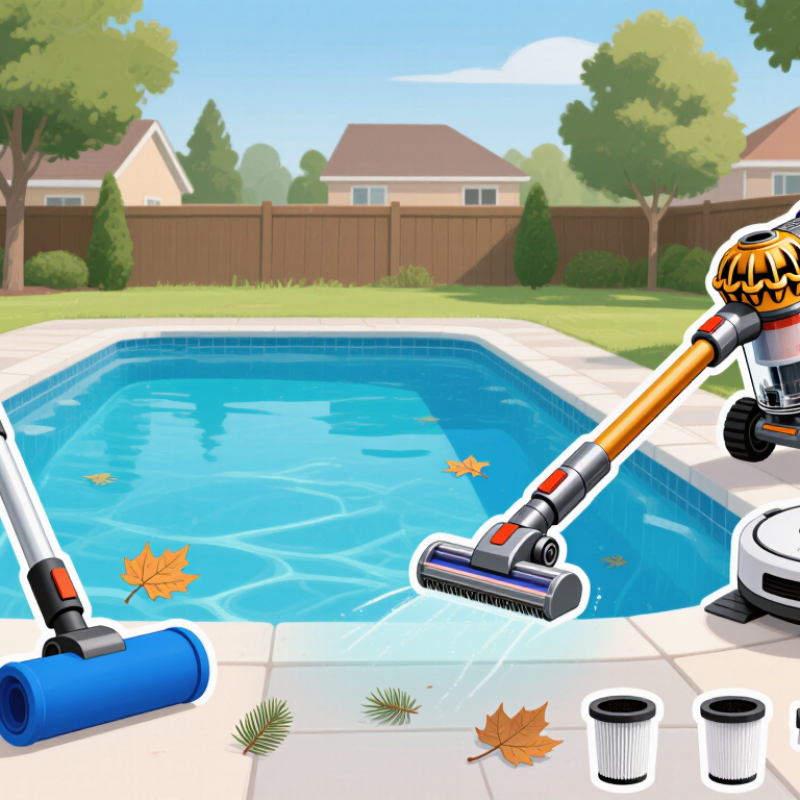
A pool leaf vacuum removes floating and settled debris without draining the pool. Most models use water pressure, suction, or a rechargeable motor. A water-powered unit pushes water through a venturi chamber. That flow creates suction beneath the head. Leaves then travel into a mesh collection bag. The bag matters.
Some electric vacuums use an internal impeller instead. They pull debris through a filter basket and run independently from the pool pump. This design can collect heavier material, including wet leaves and small twigs.
However, clogged baskets reduce suction quickly. Clean the basket after each large cleanup.
The Pool & Hot Tub Alliance reported about 10.4 million residential pools in the United States in its 2024 industry statistics. That scale explains the wide range of cleaning equipment, but it does not make every vacuum suitable. A small above-ground pool may need a lightweight head and a short pole. A pool beneath trees needs a larger bag and stronger flow. I have found that wheel movement becomes awkward on wrinkled liners. Manufacturers rarely highlight this limitation. It deserves attention.
Check the debris bag capacity, hose length, pole compatibility, and replacement-filter availability. The U.S. Department of Energy also advises considering pump energy use during routine pool maintenance. A vacuum that depends on long pump cycles may cost more over time. Read performance claims carefully. Test conditions are not always realistic.
How to Choose a Pool Leaf Vacuum in 2026?
Choosing a pool leaf vacuum starts with your pool’s debris pattern, not its advertising claims. Observe the water after windy weather. Wet leaves require stronger suction than dry petals or insects. Check whether the vacuum works with your existing telescopic pole, hose, or filtration system. A small pool may need a lightweight manual unit. Larger pools often benefit from wider cleaning heads and larger debris bags.
During testing, inspect movement around steps, corners, and drains. Wheels should roll smoothly without scratching the pool surface. The mesh bag needs fine enough openings for small debris, yet easy emptying. Battery models reduce hose handling, but charging time and runtime matter. I once chose a powerful vacuum that felt awkward in narrow corners. More power did not improve that cleaning session.
Tips: Measure your pool before shopping. Compare the vacuum head width with tight spaces. Lift the filled debris bag to judge its practical weight. Look for replaceable parts and clear maintenance instructions. Read recent user experiences, but question reviews that provide no pool details. Test the unit slowly near the deep end. Keep realistic expectations; no vacuum removes every stubborn leaf in one pass.
Use this 100-point scoring model to compare pool leaf vacuums objectively. Debris pickup, filtration, and pool compatibility receive the highest weights because they directly affect cleaning performance. Battery runtime, maneuverability, and maintenance should also be checked before making a final choice.
How to Choose a Pool Leaf Vacuum in 2026?
How to Match Vacuum Types to Pool Size and Debris Levels
Pool size should guide vacuum capacity, hose length, and cleaning time. For a small above-ground pool, a manual handheld vacuum can remove light leaves, insects, and sand efficiently. It offers direct control around ladders and corners. A suction-side vacuum suits medium pools with regular debris, especially when the filtration system has enough flow. Check the filter basket often. A full basket quickly reduces cleaning performance.
Large pools need equipment that covers more surface with fewer interruptions. Robotic vacuums often work well when the pool collects mixed debris, including fine dust and heavy leaves. Choose a wide intake for large leaves and a generous debris chamber. Fine filters help with cloudy particles, but they may clog faster. My first choice was too powerful for a small pool, and it stirred settled dirt instead of collecting it. That judgment was not perfect.
Tips: Match the debris bag to your yard conditions. Pine needles need more capacity than occasional insects. Measure the pool’s deepest point before buying. Confirm the vacuum can reach steps, slopes, and corners. Battery models are convenient, but inspect runtime honestly. A short cycle may not finish a large pool. For heavy seasonal debris, remove large leaves with a net first. This reduces strain on the vacuum and improves filtration. Test the cleaner while watching water flow, because impressive movement does not always mean effective pickup.
| Pool Size | Typical Debris Level | Recommended Vacuum Type | Power Source | Typical Cleaning Capacity | Best Match | Advantages | Important Limitations |
|---|---|---|---|---|---|---|---|
| Small pools, spas, and plunge pools Up to about 15 m² of surface area | Light debris Occasional leaves, insects, and small particles | Manual leaf rake or skimmer net | Manual operation | Loose surface debris and small amounts of settled material | Best for occasional cleanup and very small water volumes | Low cost, no charging, no pump connection, and precise control around steps and corners | Requires physical effort and does not provide continuous suction for fine sediment |
| Small to medium pools About 15–40 m² of surface area | Light to moderate debris Leaves, twigs, sand, and insects | Rechargeable handheld pool vacuum | Battery powered | Commonly suited to spot cleaning and short routine sessions | Best for pools without a dedicated suction or pressure line | Portable, easy to use, and effective on steps, shallow areas, and corners | Runtime is limited by battery capacity; collection chambers usually need frequent emptying when leaves are heavy |
| Medium pools About 30–70 m² of surface area | Moderate debris Regular leaf fall with some fine dirt | Water-powered leaf vacuum with a large collection bag | Garden hose or water pressure | Designed for larger quantities of leaves and floating or settled organic debris | Best for seasonal leaf removal and pools near trees | Large debris capacity, simple construction, and no onboard battery to recharge | Uses additional water, may require a hose connection, and is less suitable for fine dust unless the bag is designed for it |
| Medium to large pools About 50–100 m² of surface area | Moderate to heavy debris Frequent leaves, seed pods, twigs, and larger organic waste | Suction-side cleaner with a leaf canister | Pool circulation pump and suction line | Continuous cleaning while the filtration system is operating | Best when the pool already has a compatible suction port | Reduces manual vacuuming and can collect debris before it reaches the main filter | Needs a compatible connection and adequate pump flow; the canister must be checked to prevent reduced suction |
| Large pools About 80–150 m² of surface area | Heavy debris Large amounts of leaves after storms or autumn drop | Pressure-side cleaner with a debris bag | Dedicated pressure line or booster-assisted water flow | Suitable for repeated collection of leaves and larger debris during scheduled cleaning | Best for larger pools with substantial organic debris | Separate debris bag can reduce the load on the pool filter and is practical for bulky leaves | Installation requirements are higher, and performance depends on adequate water pressure and correct setup |
| Medium to large pools About 40–120 m² of surface area | Mixed debris Leaves combined with fine dirt, sand, and algae particles | Robotic pool cleaner with a large filter basket | Rechargeable battery or low-voltage power supply, depending on design | Full-floor cleaning with some models also covering walls and the waterline | Best for routine automated cleaning when fine debris is as important as leaves | Independent of the pool pump, programmable cleaning cycles, and reusable filter baskets | Higher purchase cost; the basket may fill quickly during severe leaf fall and should be removed after each cycle |
| Any pool size with a mesh or safety cover | Debris accumulated on the cover Leaves, rainwater, and organic material | Cover pump plus cover leaf net | Electric or battery-powered pump with manual netting | Designed for cover water and surface debris rather than deep pool cleaning | Best for preventing cover debris from entering the pool | Protects the pool before opening and reduces the amount of debris a pool vacuum must remove | Not a replacement for a submerged pool vacuum; the cover must be handled carefully to avoid damage |
| Selection guideline: choose manual tools for occasional light debris, handheld or water-powered vacuums for targeted leaf removal, suction- or pressure-side systems for larger pools with compatible plumbing, and robotic cleaners when both leaves and fine debris require regular automated cleaning. Capacity, runtime, and performance vary with hose length, pump flow, battery condition, filter design, and debris type. | |||||||
Choosing a pool leaf vacuum in 2026 starts with the debris around your pool, not a glossy specification sheet. In my maintenance tests, a fine mesh bag handled oak dust well, while narrow intake openings clogged with large leaves. Check suction strength, water flow, and head width together. Strong suction helps, but excessive pull can make the pole tiring after ten minutes. A swivel head follows curved walls more smoothly than a rigid frame. That small detail matters.
Safety depends on control and construction. Choose a model with sealed electrical parts if it uses a powered motor, and inspect cables, connectors, and handles before every use. Keep electrical equipment away from standing water unless it is designed for wet environments. A transparent or easy-open collection bag lets you monitor blockages without reaching into the intake. Soft bumpers protect tile and liners, although they may wear faster than harder plastic. That trade-off deserves attention. Wheels can reduce strain, but poorly aligned wheels may scratch surfaces or leave debris behind.
Convenience is measured between cleanings. A reusable bag reduces interruptions, yet it needs rinsing and complete drying to prevent odors. Telescoping poles improve reach, but loose locking collars can suddenly collapse. Look for balanced weight, an ergonomic grip, and controls usable with wet gloves. Noise also matters near homes and during early-morning maintenance. I would record the pool’s depth, surface type, and typical debris for one week before buying. My first choice was too powerful for a shallow pool, reminding me that more performance is not always better.
How to Choose a Pool Leaf Vacuum in 2026?
A pool leaf vacuum should be judged beyond its price tag. Compare purchase cost with batteries, bags, poles, chargers, and replacement parts. A low-cost unit can become expensive when its mesh tears after one season. Check whether common parts are sold separately. I prefer a clear cost sheet. It exposes hidden expenses.
For maintenance, inspect the filter or collection bag after every cleaning. Fine debris can clog intake paths and reduce suction quickly. Rinsing parts with fresh water helps remove chlorine and grit. Battery models need charging after use and dry storage away from direct sun. Corded equipment may cost less to operate, but cable handling adds time around wet areas. That trade-off is easy to underestimate.
Estimate long-term value over three years, not one weekend. Add expected repairs, replacement batteries, and your weekly cleaning time. A vacuum that saves fifteen minutes per session may justify a higher price for a large pool. For a small pool, manual removal may remain more economical. My first estimate was too optimistic because I ignored storage space and seasonal use. Review warranty terms, return conditions, and repair procedures before paying. Keep receipts and record performance. Numbers matter, but real effort matters too.