What Is Personalized Furniture and How Is It Made?
Personalized furniture is designed around a person’s space, habits, and preferences rather than a standard size or finish. It may be a desk fitted to a narrow alcove, a dining table sized for a family, or a cabinet with drawers arranged for specific belongings. The goal is practical fit, not decoration alone. Small details matter. A few centimeters can change how a chair tucks under a table or a door clears a wall.
Making a piece usually starts with a conversation and careful measurements. The maker records dimensions, intended use, preferred materials, and finish choices, then develops a drawing or digital plan for review. Accurate measurements help, but they cannot predict every daily habit. That is worth remembering. After the design is approved, materials are selected and cut; components are shaped, joined, assembled, and finished. A responsible maker explains trade-offs, such as how solid wood responds to changes in humidity or how a chosen finish affects maintenance. Samples can clarify color and texture before production begins. The process may include revisions, and even a thoughtful design can reveal an awkward detail only after use. That is part of the learning. Understanding each step helps buyers ask better questions, compare proposals, and judge whether the finished furniture will suit their home over time.
What Personalized Furniture Means: Tailored Dimensions, Function, Materials, and Finish
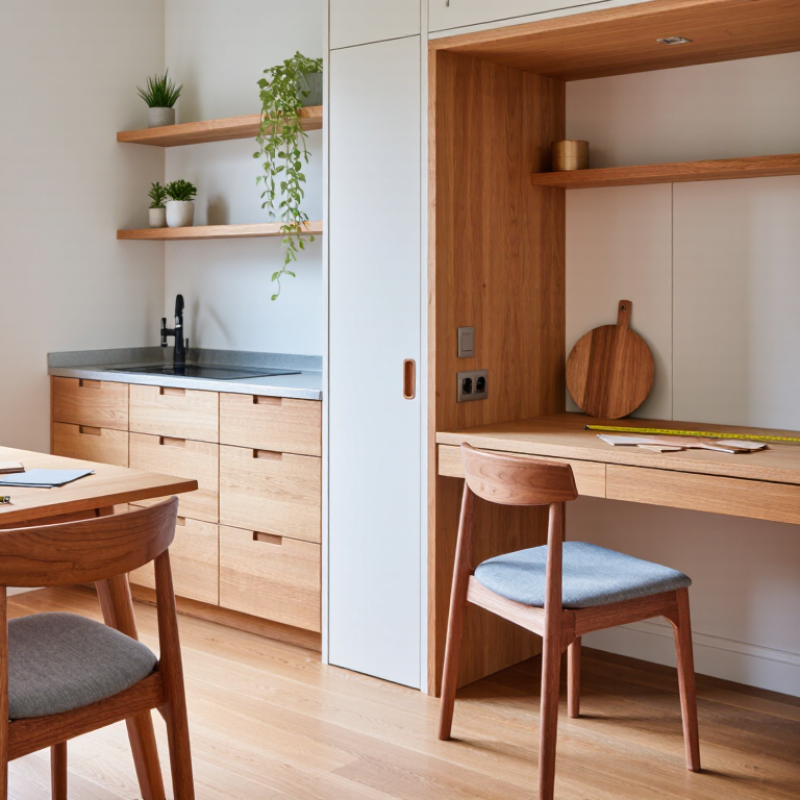
Personalized furniture is planned for a specific room, routine, and set of preferences.
A cabinet might fit a narrow alcove, while a desk may need space for a monitor and writing materials. Measurements should include wall irregularities, skirting boards, door swings, and walking clearance.
A few millimeters can matter. Small details matter.
Function shapes the design as much as size.
Drawers can be placed within easy reach, shelves set for actual objects, and table edges softened for frequent use. Materials affect weight, durability, and appearance. Solid wood shows natural grain, while plywood can provide stable panels for many furniture forms.
The best choice depends on use, budget, and maintenance expectations.
The making process usually begins with measurements and a design drawing,
followed by material selection and a review of dimensions. Components are cut, joined, and checked before the finish is applied. Oil, paint, or clear coating can change both the look and care requirements.
That sounds simple. In practice, finishes may appear different under warm evening light than they do in a workshop.
A careful maker tests samples and confirms details before production, though a drawing can still miss how a piece feels in daily use.
Room for adjustment is worth discussing.
How Customer Needs Become a Measurable Furniture Design Brief
Personalized furniture begins with a measurable design brief, not a fabric choice. A customer may ask for a reading chair that “feels supportive,” but the designer needs specifics: room width, seat height, preferred posture, and available clearance. Measure the doorway too. A beautiful chair is no help if it cannot get inside. Deloitte’s 2015 Consumer Review, “Made-to-order: The rise of mass personalisation,” reported that one in five consumers would pay a 20% premium for personalized products. This was a broad consumer finding, not a furniture-only result, but it shows why clear customization can matter.
The brief turns preferences into dimensions and decisions. Record the user’s height, how many people will use the piece, storage needs, materials, budget, and delivery constraints. For a desk, that might mean a 120-centimeter width, a cable opening on the left, and drawers sized for specific files. Confirm each detail with a sketch or sample. The first version is rarely perfect. That is normal; a short review can catch an awkward reach or a finish that looks different in daylight.
Tips: Ask customers to show how they use the room, not just describe it. Photograph measurements, label them, and confirm units. Separate must-haves from nice-to-haves. Then share the brief for approval before production. Small details get missed. A second check is worth the time.
How Seating Is Sized: Common Seat Heights Are About 430–460 mm
Personalized furniture begins with the person, not just a standard measurement.
For many chairs, a finished seat height of
about 430–460 mm
is a useful starting range. Measure from the floor to the top of the seat, including its upholstery. A soft cushion may compress under weight, making the seat feel lower than it appears.
Small differences matter. A person should be able to place both feet comfortably on the floor, with knees near a right angle and thighs supported without pressure behind them. These are practical checks, not a guarantee of perfect fit.
Leg length, posture, footwear, and the height of a dining table can all change what feels right. For a custom chair, a maker can compare the user’s seated measurements with the intended table or desk height, then adjust the frame and cushion thickness.
A simple test seat helps. Sit for several minutes, rather than judging by appearance alone.
I would not treat 430–460 mm as a rule for every body; it is an estimate that sometimes needs revising after a real person tries the chair.
How Wood Is Prepared: Indoor Furniture Often Targets 6–8% Moisture Content
Personalized furniture is shaped around a person’s space, habits, and preferred details. Before a maker cuts boards for an indoor table or cabinet, the wood needs careful preparation. A common target is 6–8% moisture content, though the right level depends on the room and local climate. Wood is not truly still. It absorbs and releases moisture as conditions change.
Lumber is often kiln-dried, then checked with a moisture meter at several points. One reading can miss a damp core. The boards may also rest in the workshop so they can adjust to indoor conditions. This step takes patience. Rushing it can lead to cupping, gaps, or joints that shift after assembly. A board can look dry and still move later.
The maker should consider species, board thickness, and the home’s typical humidity, not just chase a number. In a dry room, 6% may be suitable; in a more humid setting, the wood may need a different target. Even careful preparation cannot prevent every seasonal change. That uncertainty deserves attention when choosing joinery and planning a custom piece.
How Digital Design, CNC Cutting, and Assembly Turn Plans into Custom Furniture
Personalized furniture is shaped around a person’s room, habits, and storage needs. The process starts with measurements: wall length, doorway width, outlet positions, and the space needed to open drawers. Digital design turns those details into a 3D model, where shelf spacing, edge profiles, and clearances can be reviewed before cutting. Measure twice. A model can still miss a sloping floor or an awkward corner, so accurate site measurements matter.
Once the design is approved, software converts it into cutting instructions for a CNC machine. The machine follows a toolpath to cut panels, drill connector holes, and shape selected edges with consistent spacing. Operators check the material, grain direction, and panel position before work begins. Small errors add up. A dull bit or a sheet that shifts can leave rough edges, making test cuts and routine checks essential. CNC precision supports skilled work; it does not replace judgment.
After cutting, parts are labeled, dry-fitted, and assembled with suitable fasteners, glue, or joinery. A craftsperson checks the furniture’s squareness, drawer movement, and door gaps, then sands and finishes exposed surfaces. Sometimes a fit needs adjustment. That is normal. Inspection can catch problems, though a room or material may still behave differently than the plan suggests. The finished piece reflects both digital planning and hands-on decisions.
From Digital Plan to CNC Cut List
Example cut lengths for a made-to-measure bookcase measuring 800 mm wide × 300 mm deep × 1,800 mm high, using 18 mm-thick panels. The shelf and top/bottom lengths account for the two side panels.
Digital design defines each part’s dimensions; CNC cutting can produce the panels to the cut list, ready for assembly. These are example design measurements, not industry-wide averages.