Is Sesame Grey Granite the Best Choice for 2026?
Choosing a natural stone in 2026 is less about chasing a trend and more about matching appearance, use, and upkeep. Sesame Grey Granite stands out for its quiet gray background, fine mineral movement, and subtle specks. These details can look different under warm pendant lights or cool daylight. A polished slab may reflect light across a kitchen, while a honed finish often feels softer. Details matter. No two slabs are identical, and a small sample may not show the full pattern. View complete slabs when possible, beside cabinet doors and flooring.
This guide considers where Sesame Grey Granite may work well, from kitchen counters to bathroom vanities, and what buyers should check before choosing it. It looks at practical factors such as surface finish, stain care, installation, and the fabricator’s guidance on sealing. Maintenance needs can vary with the slab and finish, so avoid relying on broad promises. Ask for care instructions in writing. No universal winner. A stone that suits one busy household may feel too patterned, too dark, or too demanding in another home. Comparing samples in your own lighting is a simple step, but it cannot replace checking the actual slab. The sections ahead weigh these trade-offs to help you decide whether this granite fits your space, routine, and budget in 2026.
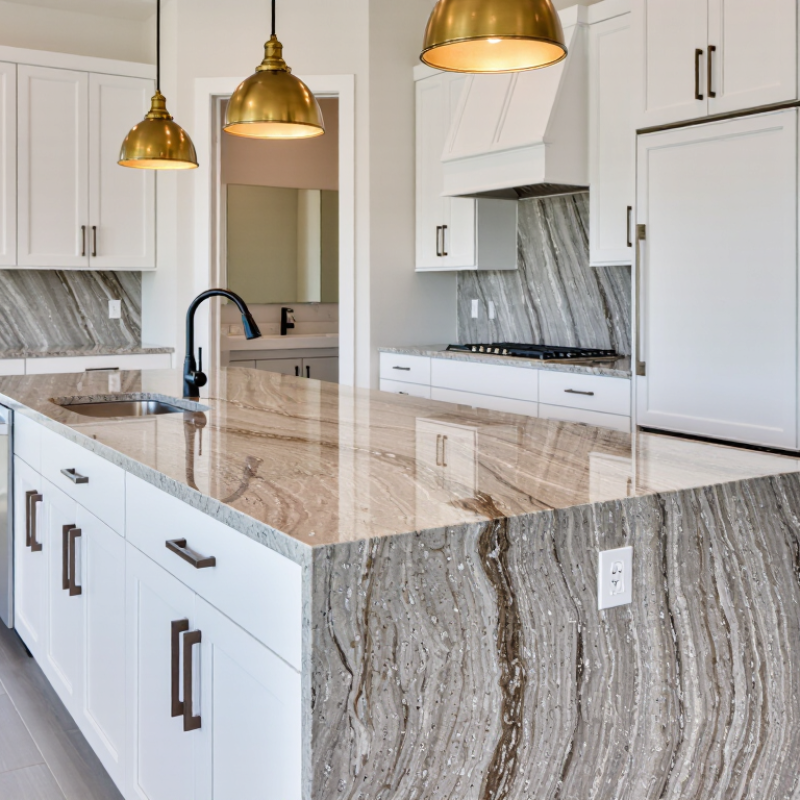
What Is Sesame Grey Granite and How Is It Formed?
Sesame grey granite is a natural stone known for its cool grey background and small, scattered mineral grains. The “sesame” effect often comes from dark flecks of mica or other minerals against lighter quartz and feldspar. Each slab has its own pattern. Some look evenly speckled; others show darker clusters or faint movement.
Geologically, granite forms when molten rock cools slowly beneath Earth’s surface. That long cooling period allows mineral crystals to grow, creating the visible grains in the stone. Over time, geological processes expose these deep-formed rocks at the surface, where they can be quarried and cut into slabs. The name “Sesame Grey” is commonly used in the stone trade, though appearance and exact mineral composition can vary by source. A sample is worth seeing in person.
The stone’s natural grain can help disguise minor marks, but it does not make the surface stain-proof or maintenance-free. Sealing needs depend on the specific slab and finish, so ask a stone professional before installation. I would not judge a whole batch from one small sample; the full slab may show more variation than expected. That matters. For kitchens or bathrooms, check the finish, inspect several slabs, and confirm care requirements with the supplier.
What Colors, Patterns, and Properties Define This Stone?
Sesame Grey granite typically presents a cool grey background scattered with small black, white, and charcoal grains. From a distance, the surface can look quietly uniform. Up close, mineral flecks create a salt-and-pepper texture, sometimes with subtle shifts toward silver or warm grey. Slab to slab, the pattern changes. That variation matters when matching countertops or flooring, so inspect the actual slabs in person.
Its crystalline structure gives the stone a firm, dense feel, and granite generally handles everyday wear well. It can resist heat and scratches, but it is not indestructible. Heavy impacts may chip an edge, and some slabs absorb stains more readily than others. Ask about the specific material’s porosity and sealing needs. A water test can offer a clue, though it does not replace professional guidance.
The restrained pattern suits kitchens, bathroom vanities, and floors where a busy look might feel tiring. Its grey palette pairs easily with pale cabinets, natural wood, or darker fixtures. Still, lighting can change how cool or warm the stone appears. I would not choose from a small sample alone; that is an easy mistake. View a full slab under lighting close to the installation space, and check how the pattern falls around sinks and seams.
How Does Sesame Grey Granite Perform in Everyday Use?
Is Sesame Grey Granite the Best Choice for 2026?
How Does Sesame Grey Granite Perform in Everyday Use?
Sesame Grey Granite handles busy kitchens well. Its dense surface resists everyday scratches better than many softer countertop materials, and a polished finish wipes clean with a damp cloth. Grey grains and small mineral flecks also help disguise crumbs between cleanups. Not everything disappears, though. Pale stone can still show dark spills or greasy marks.
Coffee, cooking oil, and acidic foods deserve prompt attention. Granite is not stain-proof, and its protection depends partly on the stone’s porosity and the quality of its sealer. Ask how often sealing may be needed, then follow the installer’s care instructions. Mild soap is usually a safer choice than harsh cleaners. A quick wipe works.
The surface feels cool and solid under a cutting board or hot pan, but use trivets and boards anyway. They protect the finish and your knives. Colour and grain can vary from slab to slab, so a small sample may not represent the whole counter. I would inspect the actual slab in natural light before choosing it. That extra step can prevent a disappointing surprise.
Which Applications Suit Sesame Grey Granite Best?
Sesame grey granite suits busy surfaces where a calm, speckled pattern can disguise everyday dust. In kitchens, its hard mineral structure handles routine use better than many softer stones, though cutting boards and trivets remain sensible. A honed or leathered finish softens glare; polished slabs reflect more light and may show fingerprints sooner.
It is also a practical option for bathroom vanities, fireplace surrounds, and indoor flooring. Fine grey-and-black grains pair easily with pale cabinetry, timber, or brushed metal. For floors, check that the chosen finish offers suitable slip resistance, especially near showers and entry doors. A glossy sample can look different under warm evening lights. Check it onsite.
Exterior steps, patios, and wall cladding may suit this granite when the stone is selected for local freeze-thaw conditions and installed with proper drainage. Not every slab behaves identically; natural variation and finish affect appearance and upkeep. Ask for a sample from the actual lot, then view it wet and dry. Sesame grey is versatile, not magical. If a uniform surface matters most, its natural speckling may feel too busy.
Is Sesame Grey Granite the Best Choice for 2026?
Indicative suitability for common applications, rated from 1 (less suitable) to 5 (highly suitable).
Sesame Grey Granite is a durable natural stone often considered for countertops, flooring, paving, and cladding. These ratings are a qualitative guide based on typical granite characteristics, not laboratory test results for a specific slab. Properties vary by quarry, finish, and installation; use suitable sealing and confirm the stone’s technical data for the intended application.
What Factors Matter When Choosing It for a 2026 Project?
Is Sesame Grey Granite the Best Choice for 2026?
What Factors Matter When Choosing It for a 2026 Project?
Sesame grey granite can suit kitchens, entryways, and outdoor spaces where a calm, speckled surface is wanted. Its grey base and scattered mineral flecks can look different under warm indoor lights than beside a sunlit window. Ask to inspect full slabs, not just a small sample. Natural variation is part of the material, but it may surprise you. Check the actual slab.
Think about use and upkeep before choosing a finish. Polished stone reflects more light and can show smudges; honed finishes look softer but may need more frequent care. For counters, ask a qualified fabricator about sealing needs, edge details, and the sink cutout. For exterior use, confirm the selected stone and finish suit local weather and slip requirements. Also compare delivered cost, including fabrication, transport, and installation.
Tips: View a dry sample beside your cabinet and flooring colors. Ask how the stone performs with common spills, and get care instructions in writing. Keep a spare piece for future repairs if possible. One detail I would revisit is the lighting plan; I once underestimated how much it changed a grey stone’s appearance.
