How to Source Konjac Green Bean Noodles in Bulk
Sourcing Konjac Green Bean Noodles in bulk requires more than comparing supplier prices. Buyers must verify texture, ingredients, packaging, production capacity, and shipment reliability before signing a large purchase order. A sample may look bright and smooth, yet soften too quickly in boiling water. That detail matters.
Dr. Hiroshi Tanaka, a food technologist specializing in konjac-based foods, advises, “Bulk buyers should test the noodle, not trust the label.” His point is practical. Request samples from several production lots. Cook them using the same water temperature and time. Check firmness, aroma, breakage, color, and sauce absorption. Record the results.
A reliable supplier should provide a clear ingredient statement, allergen information, shelf-life data, and traceable lot codes. Confirm whether the noodles contain green bean starch, konjac flour, or additional stabilizers. Ask for certificates relevant to your target market. Requirements can differ between countries. Do not assume one certificate works everywhere.
Packaging also deserves close attention. A damaged 10-kilogram carton can create waste before the product reaches your warehouse. Review inner-bag seals, carton strength, pallet dimensions, and storage conditions. Confirm minimum order quantities, lead times, payment terms, and replacement policies in writing.
Price still matters. However, the cheapest offer may hide inconsistent texture or weak export preparation. A rushed decision can become expensive. This guide explains how to compare suppliers, test product quality, assess documentation, and build a dependable bulk purchasing plan. Some assumptions may fail during real negotiations, so keep room for verification and revision.
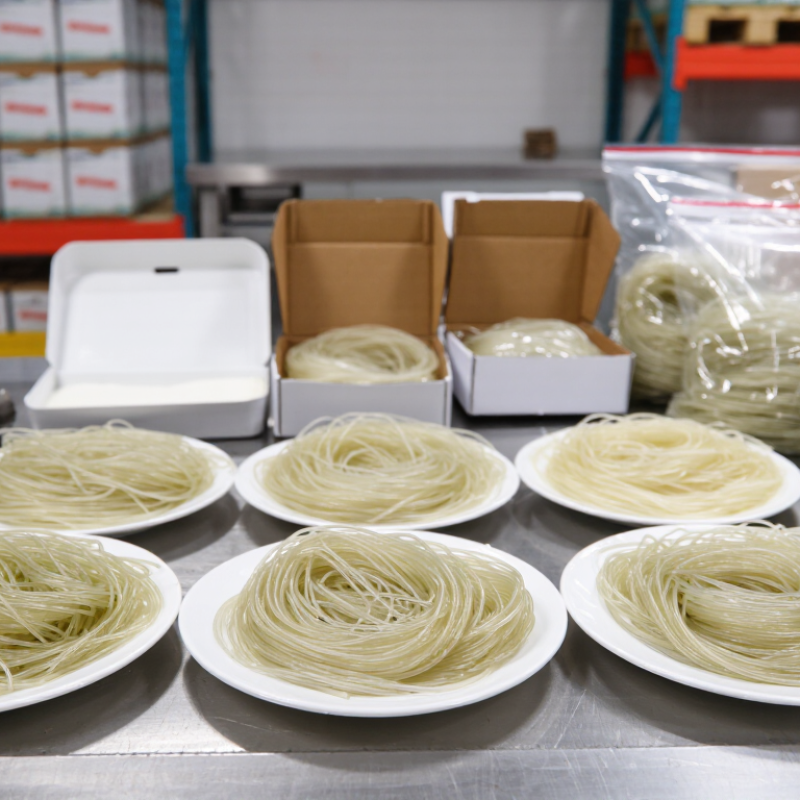
Define Konjac–Mung Bean Specifications Using E425 and Food-Grade Criteria
Bulk sourcing konjac–mung bean noodles starts with a precise product specification. Define E425 as konjac flour, konjac gum, or glucomannan, depending on the formulation and local food rules. Do not accept “konjac-based” as a complete description. Request the exact percentage, processing function, and additive declaration. The mung bean component also needs a stated range, not a vague ingredient claim.
Food-grade verification should include a current certificate of analysis for each production lot. Check moisture, viscosity, microbiological limits, heavy metals, and foreign matter. Review allergen controls and confirm whether the facility handles wheat, soy, or other sensitive ingredients. Packaging should protect the noodles from heat, light, odor, and crushing during shipment. A sealed inner pack and clear lot code matter more than attractive artwork.
For bulk orders, specify noodle diameter, length, color, cooking loss, texture, pH, and drained weight. Ask for production samples before approving a full container. The texture should remain springy after rinsing and brief heating. Test it in a real kitchen, not only in a laboratory cup. Destination-country rules may classify E425 differently, so verify permitted use, labeling, and import documents with a qualified food compliance professional. A common mistake is trusting one successful sample. Formulas can drift. Keep retain samples, compare future lots, and record every deviation, even small changes in odor or firmness.
Screen Suppliers Against HACCP, ISO 22000, and BRCGS Certification
How to Source Konjac Green Bean Noodles in Bulk
When sourcing konjac green bean noodles, certification screening should begin before price discussions. HACCP shows that the supplier identifies biological, chemical, and physical hazards during production. Ask for the current HACCP plan, critical control points, monitoring records, and corrective actions. Do not accept a certificate alone. Paperwork is not proof.
ISO 22000 indicates a broader food safety management system. Check whether its scope includes noodle processing, packing, and storage at the quoted facility. BRCGS certification can provide deeper evidence of site hygiene, traceability, product authenticity, and supplier controls. Verify the certificate number, production address, expiry date, and audit status through the certification body. Request a recent audit summary and sample batch records. A reliable supplier should trace finished noodles back to raw materials within hours, not days. That detail matters when packaging shows moisture, broken strands, or unusual odor.
Tips: Compare certificates with the factory address. Ask for a live video tour when possible. Review water testing, allergen procedures, metal detection checks, and recall exercises. Confirm that certification covers your exact product line. I would also order a trial shipment before signing a large contract. My checklist is useful, but it is not perfect. Small suppliers may present strong products with incomplete documentation, while polished documents can hide weak floor practices. Inspect samples, measure cooking texture, and record results beside each supplier’s compliance evidence.
Compare MOQ, Production Capacity, Lead Times, and Shelf-Life Data
How to Source Konjac Green Bean Noodles in Bulk
MOQ, production capacity, lead times, and shelf life should guide every bulk quotation. A low MOQ may reduce risk, but it can increase the unit price. Ask whether the MOQ applies to total weight, cartons, or one packaging design. Confirm if mixed flavors or private labels require separate minimums. Request a written specification before comparing prices.
Production capacity needs practical evidence, not optimistic figures. Ask for monthly output, available line time, and current order volume. A factory producing 20 tons monthly may have only two tons available next month. Check whether noodles are made continuously or only during scheduled runs. Lead times should include ingredient purchasing, production, inspection, packing, and shipping. For a first order, 30 to 45 days may be realistic. Custom packaging can add another two weeks.
Shelf-life data deserves careful review. Request the stated shelf life, storage temperature, packaging type, and test method. Look for batch coding, retained samples, and laboratory results covering moisture, microbial safety, and texture. A twelve-month claim means little without clear storage conditions. I once focused too heavily on the shipping schedule and overlooked packaging approval delays. That mistake changed the launch date. Build buffer time into the purchase plan. Also check whether the supplier can provide recent production samples, because noodle texture may weaken near the end of storage.
Validate COAs for Moisture, Microbes, Heavy Metals, and Glucomannan
When sourcing konjac green bean noodles in bulk, validate the COA before comparing prices. Moisture is deceptively simple. Ask whether results are reported on an as-is or dry basis, and request the sampling date, lot number, and test method. A practical specification often targets moisture below 12%, but the final limit should reflect noodle texture, packaging, and shelf life. Do not accept a copied PDF without laboratory traceability.
Microbial results need sharper review. The FDA Bacteriological Analytical Manual uses 25-gram analytical portions in common Salmonella testing workflows. Require Salmonella to be absent in 25 grams, then set limits for yeast, mold, aerobic plate count, and coliforms. The report should identify enrichment methods, detection limits, and laboratory accreditation. A low moisture result cannot rescue poor hygiene. I have seen that mistake.
For heavy metals, request lead, arsenic, cadmium, and mercury results using ICP-MS or an equally validated technique. Codex CXS 193-1995 provides an international framework for contaminant control, but buyers still need product-specific limits. Glucomannan requires equal care. Confirm the assay percentage, test basis, viscosity, and foreign-matter controls. EFSA’s 2017 opinion references three grams of glucomannan daily, divided before meals with adequate liquid, so analytical accuracy matters for intended-use claims. One imperfect detail remains: supplier COAs are snapshots, not guarantees. Retest high-risk lots independently.
How to Source Konjac Green Bean Noodles in Bulk
Validate COAs for moisture, microbes, heavy metals, and glucomannan before approving a bulk shipment.
The chart shows practical screening reference values commonly used for dried konjac-based noodle specifications: moisture ≤12%, glucomannan ≥60% on a dry basis, total plate count ≤10⁴ CFU/g, yeast and mold ≤10³ CFU/g, and lead ≤0.1 mg/kg. Require Salmonella and E. coli to be absent according to the applicable test plan. Confirm the final limits with the destination market, product formulation, and accredited laboratory.
Audit Samples, Confirm Packaging Standards, and Negotiate Bulk Contracts
Bulk sourcing starts with a sample audit, not a low quotation. Request three production samples from different lots. Cook them using the same water temperature, time, and serving size. Record firmness, springiness, color, odor, and breakage. Check net weight after draining. A perfect sample can mislead. Lot variation may appear later.
Inspect the factory’s process records, sanitation controls, and traceability system. Ask how operators manage konjac powder, mung bean ingredients, drying, and storage. Review moisture targets, shelf-life evidence, and food-contact packaging documents. Visit the facility when practical, or conduct a structured video audit. Keep sealed reference samples with signed dates. My own checklist once missed carton compression, which caused damaged inner bags during transport.
Packaging standards should be written in measurable terms. Specify noodle weight, bag dimensions, film thickness, seal strength, carton count, pallet pattern, and lot-code placement. Confirm the label includes ingredients, preparation instructions, storage conditions, allergens, and required market information. Use approved artwork and a pre-shipment inspection. Contracts should define acceptable quality limits, inspection rights, production lead times, and remedies for shortages or damaged goods. Negotiate deposits carefully. Link final payment to inspection results and complete documents. Include a process for formula or packaging changes. Prices matter, but unstable supply costs more. Keep the agreement plain. Suppliers may agree verbally, then interpret details differently.
