China Top Lead Stained Glass Windows Manufacturers
Lead Stained Glass Windows combine colored glass, carefully joined lead came, and the steady hand of skilled makers. In China, manufacturers serve a range of projects, from compact cabinet inserts to tall panels for homes, hotels, and places of worship. A finished window can transform plain daylight: ruby glass warms a hallway, while textured clear pieces soften the view without hiding it. Details matter. The quality of the glass, the consistency of the soldered joints, and the strength of the frame all influence how a panel looks and performs over time.
This guide introduces China’s leading manufacturers and outlines practical points buyers can use when comparing them. A useful review looks beyond photographs. Ask about custom design support, glass and lead specifications, production checks, packaging, and experience with projects similar to yours. Request clear drawings and written details before approving a sample or order. A polished catalog is not proof of a durable window, and a large factory is not automatically the right partner. Not every time. Supplier rankings can also shift with product range, service, and project needs, so claims deserve verification. The best choice is usually the maker that explains its process plainly, answers technical questions with care, and can show relevant work. Even then, some uncertainty remains until the panel is installed and viewed in its actual light.
Understanding Lead Stained Glass Windows and Their Uses
Lead stained glass windows are assembled from small colored or clear glass pieces, joined by narrow lead channels called cames. The cames create a visible grid and help hold each piece in place. Makers may add painted details, such as a leaf vein or a face, then fire them onto the glass. This construction gives windows both image and structure, though each panel depends on careful fitting and sound support.
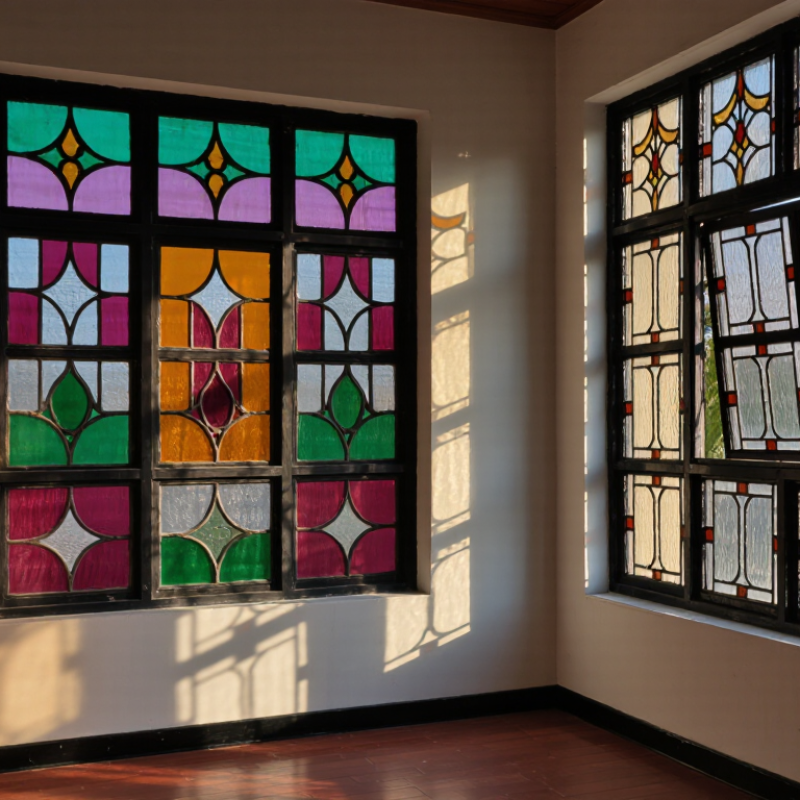
Daylight changes the design throughout the day. In a stairwell, amber and blue panes can soften a shaft of sun; in a front door, textured glass can admit light while blurring direct views. These windows also appear in churches, libraries, restaurants, and older homes, where they can mark an entrance or give a plain wall a focal point. The effect is immediate. Yet color can darken a small room, and intricate panels need thoughtful cleaning and periodic inspection for loose joints or cracked glass. Not every space benefits. A good design considers the room’s light, viewing distance, and maintenance needs—not just the pattern. It is easy to favor a beautiful motif; getting its scale and brightness right takes more care.
China’s Lead Stained Glass Manufacturing Industry
China’s lead stained glass manufacturing industry combines architectural glass processing with detailed hand assembly. Workshops cut colored sheets to patterns, wrap edges in lead came, and solder the joints. The result depends on more than color selection. Accurate fitting and consistent soldering help panels hold their shape, especially in large windows exposed to movement and changing temperatures.
Upstream capacity is substantial, but broad glass statistics should not be mistaken for stained-glass output. China’s National Bureau of Statistics reported 969.41 million weight boxes of flat glass production in its 2023 Statistical Communiqué on National Economic and Social Development. That figure describes the wider flat-glass sector, not leaded decorative panels. The distinction matters. For buyers and project teams, useful checks include glass thickness, joint finish, panel dimensions, and sample approval under natural light. Small details count. A slightly uneven line can become obvious across a sunlit window. Public data on stained-glass-specific production and defect rates remains limited, so industry scale alone cannot confirm a supplier’s craftsmanship. That gap deserves attention.
Profiles of Notable Chinese Lead Stained Glass Manufacturers
Profiles of notable Chinese lead stained-glass manufacturers are most useful when they describe workshop capability, not just export reach. Buyers can compare in-house glass cutting, came assembly, soldering, painted details, and the ability to match a supplied drawing. Ask for close-up photographs of joints and completed installations. Look for clear notes on panel size, support bars, packing, and installation conditions. Small samples help assess color and texture, though they cannot fully predict how daylight will change the finished panel.
UNEP and the Global Alliance for Buildings and Construction reported that buildings and construction accounted for 34% of global energy demand and 37% of energy- and process-related carbon dioxide emissions in 2022. That is not a stained-glass-specific measure. It does show why a manufacturer’s profile should explain how decorative glazing fits into a building’s wider performance needs. Request details on panel weight, framing, and maintenance, alongside craft credentials. Some supplier profiles offer little public evidence of long-term durability. That gap matters. Ask for project references and a written description of the proposed assembly before comparing quotations.
How to Compare Manufacturers for Quality and Service
When comparing stained glass window manufacturers in China, look beyond polished portfolio images. Ask which glass types, lead came profiles, and soldering methods suit your project. Small details matter. Request close-up photos of joints, corners, and frame connections, plus a physical sample when practical. Check whether color variation and texture are explained before production, not after delivery.
Quality should be documented, not just promised. Ask for evidence. Request dimensioned drawings, material specifications, inspection checkpoints, and packaging details. A reliable supplier should explain how it checks panel dimensions, surface flaws, and fit against the approved drawing. Clarify who handles revisions, expected response times, and replacement parts. A fast reply is useful, but precise answers are better. Vague answers are a reason to pause before paying a deposit.
Service matters during awkward moments. Confirm one contact person, progress updates, and a written process for changes. Compare quotes line by line; a lower price may omit crating, sample approval, or installation guidance. I would not treat one flawless sample as proof of consistent production. Ask how each batch is checked and what records you can review. No comparison is perfect. Timelines and communication can shift, so keep questions in writing and allow room for misunderstandings.
China Leaded Stained Glass Manufacturers: How to Compare Quality and Service
Suggested buyer-set weighting for a manufacturer evaluation scorecard
These proposed weights total 100% and are a comparison framework, not measured industry benchmarks or supplier results. Compare manufacturers using documented evidence, such as material specifications, project samples, approved drawings, delivery records, and written warranty terms.
