
Who Are the Top Ordinary Plywood Manufacturers in China?

Choosing a reliable Ordinary Plywood manufacturer in China takes more than comparing prices or catalog photos. Buyers need to understand what each factory can consistently produce, from panel thickness and veneer quality to sanding, bonding, and packaging. A sheet may look smooth under showroom lights yet reveal uneven edges or surface patches after cutting. Details matter.

This guide examines how to identify leading manufacturers and what evidence to review before requesting a quotation. Useful checks include product specifications, sample consistency, production capacity, quality-control procedures, and clear answers about available grades and dimensions. Ask how the factory handles moisture, core gaps, and protective packing for transport. These practical questions can reveal more than a polished brochure. Not every mill fits.

There is no single supplier that suits every project. A furniture maker may prioritize a clean face veneer, while a construction buyer may focus on stable dimensions and dependable delivery. Rankings can also overlook smaller factories or change as products and operating conditions shift. Treat any shortlist as a starting point, not a guarantee. Compare current samples and documentation, confirm details directly, and match the manufacturer’s capabilities to your intended use. This approach helps readers assess China’s Ordinary Plywood suppliers with care, rather than relying on broad claims alone.
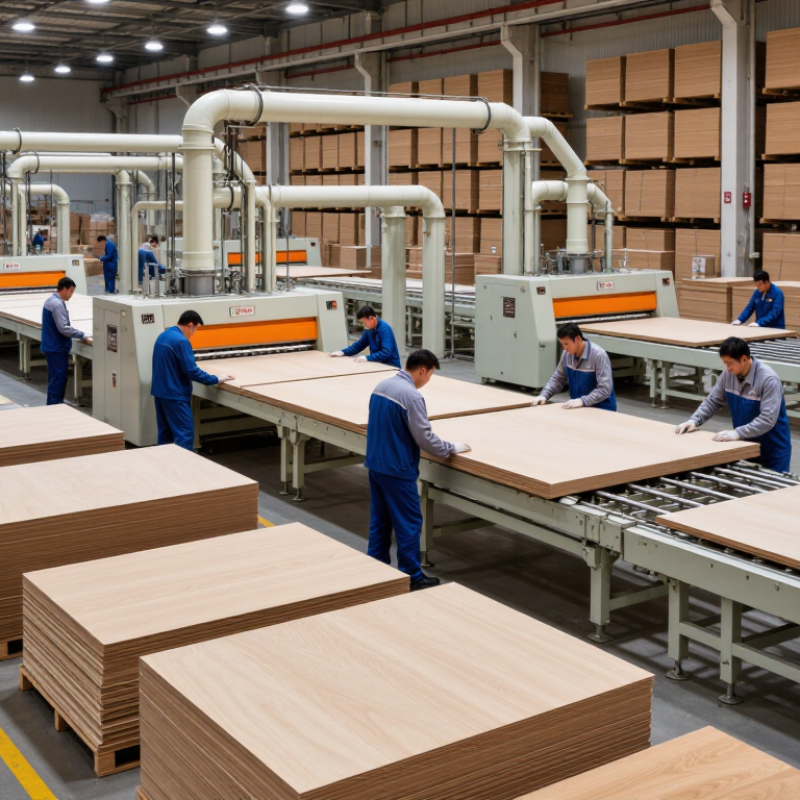
Who Are the Top Ordinary Plywood Manufacturers in China?

Ordinary Plywood in China: Product Scope Under GB/T 9846-2015

Under GB/T 9846-2015, ordinary plywood is a wood-based panel made by bonding veneers into a layered sheet. The standard sets out product classifications, technical requirements, test methods, inspection rules, and guidance for marking and storage. It gives buyers and manufacturers a shared basis for discussing quality. Not every panel sold as plywood has the same construction or intended use.

When checking a product, ask for its declared grade, dimensions, thickness, and relevant test information. Look closely at the face veneer: visible knots, patches, and color variation can affect appearance, but do not alone establish structural performance. Core gaps or uneven edges may also matter for cutting and installation. Small details count.

The standard helps define what to assess, yet it cannot replace a project-specific review. A panel suitable for furniture interiors may not meet a buyer’s needs for another application. Confirm the intended use and request current product documentation. I would not judge consistency from one sample alone; batches can vary, and that deserves a second look.

China’s Plywood Industry: Comparing Manufacturers by Annual Output and Capacity

China’s ordinary plywood sector includes factories of very different scales. Comparing annual output helps buyers understand how much product a manufacturer actually makes, while stated capacity shows its maximum production potential. These figures are not interchangeable. A plant may list high capacity but run fewer shifts because of seasonal demand, maintenance, or limited veneer supply.

Useful comparisons look beyond headline numbers. Ask whether output refers to finished sheets or total production, and whether the figure covers one factory or several sites. Check the reporting year, too. A number without a date can be misleading. On the factory floor, drying schedules, press availability, and sheet thickness all affect how many boards can be completed each day. A large press line alone does not prove steady delivery.

Capacity still matters. It can indicate whether a producer has room for repeat orders or sudden volume increases. But larger is not always better. Smaller operations may offer closer supervision of batches, though they can face tighter scheduling during busy periods. I would verify annual output through recent production records and compare it with equipment, staffing, and delivery history. The data is sometimes incomplete, and that deserves a cautious note. A clear explanation of the gap between installed capacity and actual output is often more useful than a polished production claim.

Leading Producers: Company Scale, Product Range, and Production Bases

China’s ordinary-plywood producers vary widely in mill capacity, product mix, and access to raw materials. FAO’s 2022 forest-products reporting shows China accounted for roughly two-thirds of global plywood production. That scale signals a deep supplier base, but national output does not reveal the capability of any single mill. Buyers should check actual monthly capacity, press-line numbers, and recent shipment records.

Product range matters too. Some mills focus on common thicknesses for furniture and interior fit-outs; others offer more veneer choices, calibrated panels, or custom sizes. Ask for current specifications, not just a catalogue.

Production bases in Shandong, Jiangsu, and Guangxi benefit from established timber-processing networks, though transport costs and veneer availability differ by location. The details matter. A large site can still have uneven quality between batches.

I would compare factory records with samples from the same production run, then check thickness, bonding, and surface consistency. That comparison is useful, but it takes time.

Quality Benchmark: E1 Formaldehyde Limit of 0.124 mg/m³ Under GB 18580-2017

When comparing ordinary plywood manufacturers in China, treat the E1 figure as a measurable benchmark, not a marketing phrase. Under GB 18580-2017, the formaldehyde emission limit for covered wood-based panels and products is 0.124 mg/m³, measured using a 1 m³ climate chamber method. Ask for the full test report, including the tested product, thickness, date, and method. A certificate for a different panel may not represent the plywood being offered.

Look for traceable batch records and consistent results from qualified testing, not just a printed E1 label.

Small details matter. Check whether the report matches the core and surface construction in your order. Plywood can also behave differently after installation, especially when many panels are placed in a small, poorly ventilated room.

Passing the chamber limit does not guarantee a particular indoor-air reading. That distinction is easy to overlook. I would also compare how clearly a manufacturer answers technical questions; vague paperwork deserves follow-up, even when the quoted price is attractive. A careful review is less tidy than a simple ranking, but it gives buyers firmer grounds for judging quality.

How to Verify Manufacturer Claims: Certifications, Test Reports, and Export Records

A manufacturer’s certificate is a lead, not proof that a shipment meets your specification. Check the issuing body, certificate number, validity dates, factory address, and product scope directly with the issuer. ISO 9001 covers quality-management systems; it does not certify plywood strength or emissions. Forest Stewardship Council or PEFC chain-of-custody documents address material sourcing, not panel performance. Details matter.

Ask for a recent test report matching the exact panel thickness, adhesive type, and product grade you plan to buy. Check the test date, sample description, methods, results, and laboratory accreditation. For example, EN 314-2 evaluates plywood bond quality, while EN 636 classifies plywood for use conditions. A report for a different product is a warning sign. So is a missing batch reference. A tidy PDF is not proof.

Cross-check trading history using the United Nations Comtrade database, which records international trade by product code, value, and quantity. Its HS 4412 series covers plywood and similar laminated wood products; compare several years, destinations, and quantities rather than relying on one large shipment. FAOSTAT’s Forestry Production and Trade database provides country-level production and trade context. Neither database verifies an individual factory’s quality. Ask for redacted invoices or shipping records that match the exporter and product category. Some records may be incomplete. Treat that uncertainty honestly.

Pin It on Pinterest

Share This