What Are the Top Types of Hardwood Bathroom Vanities?
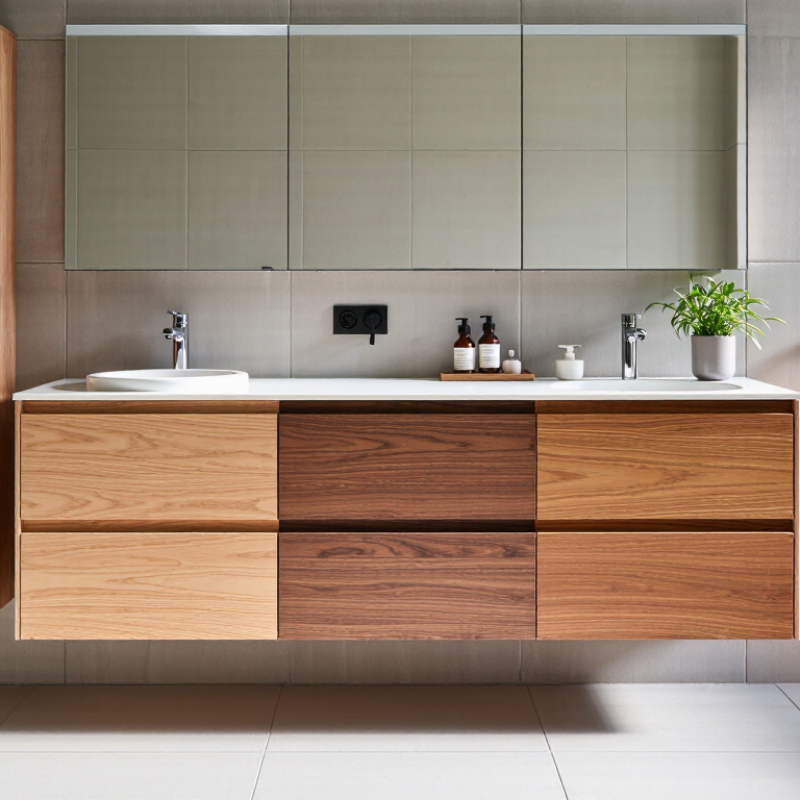
Choosing a Hardwood Bathroom Vanity involves more than matching a cabinet to the tile. The wood affects color, grain, durability, and the way the room feels each morning. Oak offers prominent grain and a sturdy, familiar look. Maple has a smoother surface and suits clean, understated designs. Walnut brings deeper brown tones and distinctive variation, while teak is valued for its natural oils and warm appearance. Each has trade-offs.
Bathroom conditions matter. Steam, splashes, and standing water can damage poorly sealed wood, even when the species is naturally durable. Check that the vanity has a well-applied finish, sealed edges, and solid joinery. Open drawers and look closely at how the cabinet is built. Small details count. A beautiful wood sample does not tell the whole story.
This guide compares popular hardwood choices and explains how their appearance, maintenance needs, and cost can shape a practical decision. It also considers construction and finish, because a carefully protected oak cabinet may serve better than a poorly made vanity from a more expensive species. No wood is perfect. Dark walnut can show dust, and lighter maple may reveal water marks if neglected. Think about ventilation, household routines, and the bathroom’s daily use before choosing. The right vanity is not simply the hardest or rarest wood; it is the one whose character and care requirements fit your space.
How Hardwood Vanity Types Compare by Species and Janka Hardness
Hardwood bathroom vanities vary in dent resistance, and the Janka scale offers one useful comparison. It measures the force needed to embed a steel ball halfway into wood. Higher figures generally indicate greater resistance to dents, not waterproofing. Maple rates about 1,450 lbf, while hickory reaches roughly 1,820 lbf. Both suit busy bathrooms where drawers and cabinet fronts get frequent use. Numbers help.
White oak, at about 1,360 lbf, balances hardness with a pronounced grain that remains visible under many finishes. Black walnut measures around 1,010 lbf, and black cherry about 950 lbf. These softer choices can show marks sooner, especially near handles or lower doors. Their warmth may still be worth that trade-off. Janka values are averages, and wood batches can differ.
Hardness alone cannot predict how a vanity will age in a damp room. Finish quality, sealed edges, joinery, and ventilation matter too. White oak’s structure can offer better moisture resistance than some woods, but it still needs a sound protective finish. I would not choose by score alone; that shortcut seems tidy, but misses daily care and the room’s humidity. A small finish sample can reveal color changes and water spotting before the full cabinet is installed.
Oak Vanities: Red Oak—1,290 lbf Janka (USDA Forest Products Lab.)
Red oak is a familiar hardwood choice for bathroom vanities, with a Janka hardness rating of 1,290 pounds-force, according to the USDA Forest Products Laboratory. The test measures the force needed to press a steel ball into wood. That figure gives a useful comparison, not a guarantee of long-term performance. A vanity also faces damp air, occasional splashes, and daily contact with drawers and cabinet doors.
Red oak’s open grain often shows as bold lines and small pores, giving a vanity a distinct, natural texture. It can suit both clear finishes and darker stains, though stain may appear uneven if the surface is not prepared carefully. Pay attention to sealed edges, joints, and the area around the sink; these details help limit moisture entry. Wipe standing water promptly and keep the room ventilated. A strong hardness rating helps, but it does not make wood waterproof. That distinction is easy to overlook. Red oak can dent or change appearance over time, and its grain may feel busier than expected in a small bathroom. A finish sample viewed beside the tile and under the room’s actual lighting can prevent a disappointing mismatch.
What Are the Top Types of Hardwood Bathroom Vanities? - Oak Vanities: Red Oak—1,290 lbf Janka (USDA Forest Products Lab.)
Selected North American hardwoods commonly considered for bathroom vanity cabinetry. Janka figures are hardness ratings, not measures of water resistance. | Hardwood | Janka Hardness | Typical Appearance | Vanity Considerations |
| Red oak | 1,290 lbf | Light to medium brown with a prominent, open grain. | A durable, traditional cabinetry choice. Its open grain and all exposed surfaces should be protected with an appropriate finish. |
| White oak | 1,360 lbf | Light tan to medium brown with visible grain. | Hard and commonly used for furniture and cabinetry. Its vessels are often blocked by tyloses, but a bathroom vanity still needs a protective finish. |
| Hard maple | 1,450 lbf | Usually pale cream to light reddish brown with a fine, even grain. | The hardest wood in this selection; its relatively subtle grain suits both painted and clear-finished cabinetry. |
| Yellow birch | 1,260 lbf | Pale yellowish to light reddish brown, often with a fine, fairly even grain. | A hard, workable cabinetry wood. Use a compatible finish to help protect the surface from bathroom moisture and spills. |
| Black walnut | 1,010 lbf | Light brown to deep chocolate brown, often with contrasting grain. | Valued for its darker appearance and used in furniture and cabinetry; protect the wood from standing water and repeated splashes. |
| Black cherry | 950 lbf | Reddish brown that typically deepens with age and light exposure. | Offers a smooth, refined appearance and is used for furniture and cabinetry. A durable finish helps limit moisture exposure and surface damage. |
Janka hardness values are in pounds-force (lbf) and are reported for the named wood species in USDA Forest Products Laboratory references. Hardness does not make wood waterproof: seal the vanity, including edges and cutouts, wipe up standing water, and maintain the finish.
Maple Vanities: Hard Maple—1,450 lbf Janka (USDA Forest Products Lab.)
Hard maple is a strong choice for a bathroom vanity when daily knocks and drawer use matter. The USDA Forest Products Laboratory lists hard maple at 1,450 lbf on the Janka hardness scale. That rating measures resistance to indentation, not resistance to water. A damp towel, splashed faucet, or wet countertop edge can still challenge the finish. Hardness helps, but it is not a force field.
The USDA FPL’s Wood Handbook explains how wood responds to changing moisture conditions. In a bathroom, humidity can rise after a hot shower and fall again later. A well-sealed maple cabinet can help limit moisture entry, though seams and cut edges deserve extra attention. Look for tight joinery and a finish that covers exposed surfaces. Maple’s pale, fine grain also shows small dents and finish wear more readily than some darker woods. That can be useful—or a little annoying.
Tips: Run the bathroom fan during showers and afterward. Wipe standing water near the sink promptly. Check the finish around faucet holes and cabinet joints each season. Ask whether the cabinet’s interior and underside are sealed, too. Even good care cannot prevent every mark.
Hardwood Janka Hardness for Bathroom Vanities
Janka ratings measure resistance to denting: higher values indicate harder wood. Hard maple rates 1,450 lbf. Hardness alone does not determine bathroom suitability; moisture protection and proper finishing are also important.
Cherry and Walnut Vanities: 950 and 1,010 lbf Janka (USDA FPL)
Cherry and walnut offer warmth, but their Janka figures are close: cherry measures 950 lbf, while walnut measures 1,010 lbf, according to the USDA Forest Products Laboratory. The test measures the force needed to press a steel ball halfway into wood. That number is useful, but it is not a bathroom-survival score. It describes resistance to denting, not protection from moisture, swelling, or finish failure.
Cherry often has a fine, even grain and a reddish-brown tone that deepens with age. Walnut usually shows richer brown color and more visible grain variation. Both can suit a vanity where wood character matters. Still, wood moves. I would look closely at the cabinet’s joinery, sealed edges, and finish, especially near the sink and floor. A small splash can become a repeated source of dampness. Neither species is maintenance-free, and a harder rating does not prevent scratches or dents. Choose based on the look you prefer, then keep standing water off the surface.
Teak Vanities: 1,070 lbf Janka Hardness (USDA FPL)
Teak’s Janka hardness is 1,070 lbf, according to the USDA Forest Products Laboratory’s Wood Handbook (FPL-GTR-282, 2021). The Janka test measures the force needed to press a standard steel ball halfway into wood. ASTM D143-22 outlines mechanical tests for wood specimens, helping put the figure in context. A harder surface can resist everyday dents from toiletries or a dropped comb better than a softer one. Still, hardness is not waterproofness. Not the whole story.
In a bathroom, moisture often reaches vulnerable details first: an unsealed cut edge beneath a sink, a drawer joint, or the toe-kick near damp tile. Teak’s 1,070-lbf rating describes indentation resistance, not how a vanity will perform after repeated splashes or poor ventilation. Check that exposed edges and joints are properly sealed, and wipe standing water from the countertop and cabinet face. A damp hand towel left against a drawer front can leave moisture sitting where the finish is thinnest. Teak may suit a busy bathroom, but construction and upkeep still matter; hardness alone is an incomplete buying guide.
