Why Choose Furniture Sectionals for Global Sourcing?

Why Choose Furniture Sectionals for Global Sourcing?

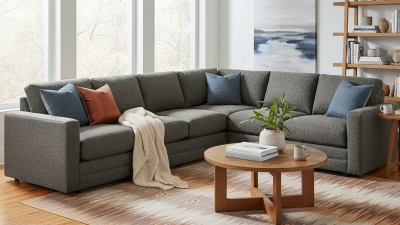
Global buyers increasingly choose furniture sectionals for their adaptable design, efficient shipping, and broad market appeal. A sectional sofa can serve a compact apartment in Tokyo or a spacious family room in Toronto. Its modular pieces also simplify replacement, storage, and showroom presentation. That flexibility matters.

Susan Inglis, founder of the Sustainable Furnishings Council, has emphasized, “Sustainability is a journey, not a destination.” Her perspective fits global sourcing decisions. Responsible buyers must examine wood certification, fabric composition, foam performance, packaging, and factory working conditions. A supplier’s attractive catalog is not enough. Reliable documentation matters more.

Furniture sectionals can reduce packaging volume when components nest carefully. They may also support multiple layouts without requiring entirely new products. However, the model is not flawless. Large corner units can still consume considerable container space. Different assembly systems may create service problems across markets. Buyers should request samples, inspect stitching, test connector strength, and verify carton dimensions before placing large orders.

Experience exposes small weaknesses.

A practical sourcing strategy compares more than price. It evaluates lead times, quality consistency, spare-part availability, communication, and compliance records. Suppliers should explain material origins clearly and provide realistic production schedules. Buyers also need to consider local comfort preferences, doorway sizes, climate, and cleaning habits. These details can determine whether furniture sectionals succeed after arrival. The best choice is rarely the cheapest option. It is the one that balances durability, flexibility, responsible production, and dependable after-sales support.
Why Choose Furniture Sectionals for Global Sourcing?

What Are Furniture Sectionals in Global Sourcing?

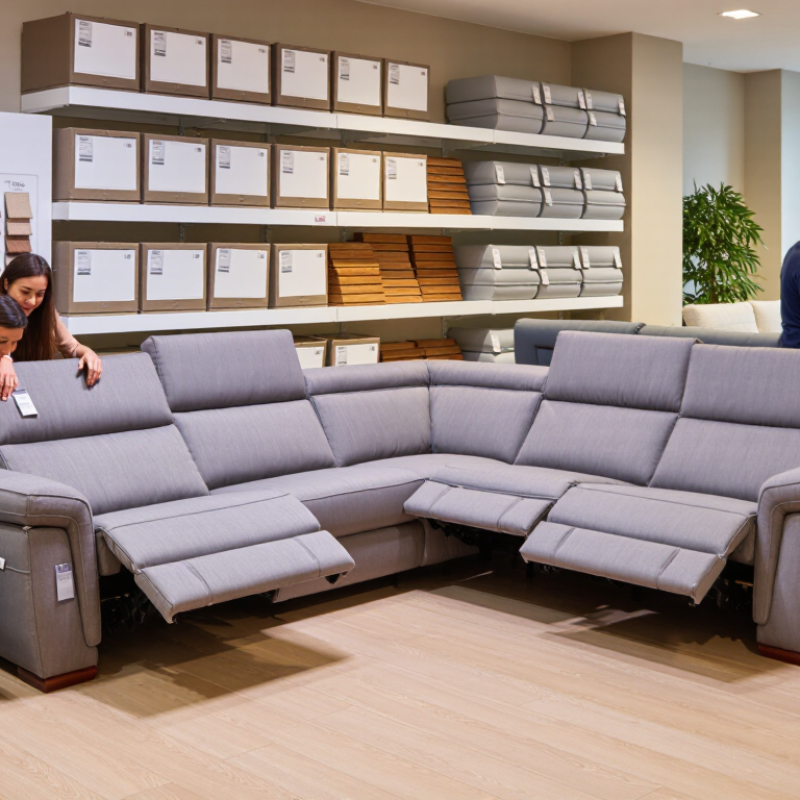
Furniture sectionals are coordinated seating units built from separate pieces, such as sofas, chaises, corners, and ottomans. In global sourcing, buyers can purchase these modules together or separately. This structure supports different room sizes, container plans, and retail price points.

A sectional is not simply a large sofa. Its connectors, frame tolerances, upholstery, and packaging must work as one system. During factory inspections, I would check joint alignment, cushion recovery, fabric tension, and carton protection. Small failures become expensive after ocean transport. Grand View Research projects the global modular furniture market to grow at approximately 5.8% annually through 2030. This growth reflects demand for flexible products in urban homes and compact commercial spaces.

Sectionals also help importers test markets with fewer fixed designs. A buyer might source a three-seat base, add a chaise later, and reduce unsold inventory. The approach sounds efficient. It is not always simple. Different suppliers may interpret “modular” differently, creating mismatched colors or connection hardware. CSIL’s World Furniture Outlook 2024 places global furniture consumption above 1.5 trillion U.S. dollars, showing the scale of this competitive sector. However, market size does not guarantee product success. Buyers still need verified material specifications, load testing, packaging trials, and clear replacement-part terms before ordering.

How Do Sectionals Support Flexible Product Planning?

For global sourcing teams, sectionals turn one sofa concept into a controlled family of products. CSIL’s World Furniture Outlook 2024 valued global furniture consumption at roughly US$1.5 trillion in 2023. In that scale, flexible planning matters more than a single seasonal bestseller. A sectional can combine an armless chair, corner unit, chaise, and ottoman. Each module shares frames, cushions, packaging logic, and quality checks. Small changes, big reach.

This structure lets buyers test a two-seat configuration before expanding into L-shaped or larger layouts. They can adjust fabric, leg finish, and seat depth for regional preferences without redesigning every component. Grand View Research’s 2024 modular furniture analysis projects steady market growth through 2030, supported by space-conscious urban living. That signal supports modular development, but forecasts are not guarantees. A team still needs reliable lead-time data, carton measurements, and supplier capacity before committing. Otherwise, flexibility becomes inventory.

In practice, I would plan a core module set, then create regional option packs. A compact chaise may suit smaller apartments, while deeper seating may fit larger homes. The same frame can simplify sampling and reduce duplicate tooling. However, more combinations can confuse customers and complicate assembly instructions. Product teams should review sell-through by configuration, not only total sectional revenue. That discipline reveals which options deserve replenishment and which should quietly disappear.

Why Choose Furniture Sectionals for Global Sourcing? - How Do Sectionals Support Flexible Product Planning?
Planning Dimension Sectional Furniture Fact Flexible Product Planning Benefit Sourcing and Product Implication
Modular Configuration Sectionals are assembled from separate units such as armless chairs, corner seats, loveseats, ottomans, and chaises. One platform can support multiple layouts instead of requiring a separate frame for every room shape. Plan a shared module library with compatible connectors, cushions, covers, and packaging specifications.
Typical Module Count A sectional commonly uses two to seven or more coordinated modules, depending on the intended configuration and room size. The assortment can expand or contract by adding or removing modules. Source core modules first, then introduce optional pieces according to regional demand and sales performance.
Reversible Chaise A reversible chaise can be positioned on either the left or right side of the seating arrangement. One item can serve customers with different room orientations and reduce the need for separate left-hand and right-hand stock. Confirm symmetry, attachment hardware, cushion orientation, and assembly instructions before production approval.
Cover and Color Options The same sectional frame can be upholstered in different fabric types, colors, and performance finishes. Design teams can refresh the assortment through upholstery changes without redesigning the complete structure. Use a controlled material library to simplify testing, color approval, care labeling, and replacement-part planning.
Seat Width Planning Individual sectional seats are commonly planned around approximately 24–30 inches (61–76 cm) wide, although specifications vary by design. Standardized seat modules make it easier to create compact, standard, and spacious configurations from the same design family. Keep module widths consistent where possible to improve interchangeability and simplify dimensional drawings.
Room-Size Adaptability Separate modules can be arranged in straight, L-shaped, U-shaped, or other configurations. The same product family can target apartments, family rooms, hospitality interiors, and larger living spaces. Prepare configuration diagrams and overall dimensions for each target market rather than relying on a single display layout.
Packaging Efficiency Modular units can be packed separately, while removable legs and detachable backs can reduce package dimensions for some designs. Smaller individual cartons can improve handling flexibility and may help optimize container loading. Validate carton strength, protection for upholstery, dimensional weight, stacking limits, and final assembled dimensions.
Container Compatibility Typical internal dimensions are approximately 5.9 m in length for a 20-foot dry container and 12.0 m for a 40-foot dry container; actual usable space depends on the carrier and equipment. A modular bill of materials allows order quantities to be adjusted to available container space. Build loading plans using packed carton dimensions, palletization rules, aisle clearance, and protection requirements.
Inventory Strategy Core modules and optional modules can be stocked separately and combined when orders are received. This supports a postponement strategy and reduces the risk of holding complete configurations that may not match local demand. Classify modules as core, seasonal, regional, or made-to-order items and set separate replenishment rules.
Replacement Parts Individual covers, legs, connectors, cushions, and hardware may be replaceable when the design allows service access. A common module platform can simplify after-sales support across several configurations. Create spare-part codes and compatibility records for every module, upholstery version, and hardware revision.
Quality Control Sectionals require checks for frame alignment, connector fit, cushion dimensions, seam quality, surface appearance, and overall stability. A standardized inspection checklist can be reused across many configurations within the same product family. Use first-article approval, module-level inspections, configuration testing, and packed-carton verification before shipment.
Regional Compliance Furniture requirements can differ by destination, including labeling, flammability, chemical restrictions, packaging, and consumer-safety rules. A common structural platform can be adapted with market-specific materials, labels, or documentation. Confirm destination-country requirements before selecting upholstery, foam, adhesives, finishes, and packaging materials.
Product Lifecycle A sectional range can retain its basic modules while changing fabrics, colors, legs, trim, or selected accessories. The product line can be refreshed with lower structural-development effort than a completely new collection. Separate platform design decisions from seasonal styling decisions to improve long-term sourcing flexibility.

Which Materials and Designs Suit International Markets?

Choosing sectional furniture for global sourcing requires more than attractive shapes. Materials must survive different climates, shipping conditions, and household habits. A kiln-dried hardwood frame offers dependable strength, while reinforced engineered wood can reduce cost and weight. Both options need moisture-resistant treatment and clear quality testing.

Fabric selection deserves equal attention. Tightly woven polyester blends are practical for high-use homes because they resist abrasion and dry quickly. Performance leather-look materials suit hospitality projects, but heat can make some surfaces uncomfortable. Removable covers help with cleaning and replacement. They also increase packaging complexity.

Climate changes the best design.

In humid regions, open bases and breathable upholstery can reduce trapped moisture. In colder markets, deeper cushions and softer fabrics may feel more inviting. Modular corner units, reversible chaises, and compact armless sections support different room sizes. Standard connection hardware makes assembly easier for overseas distributors.

Design details should respect local preferences without becoming too specific. Neutral colors travel well, yet regional accents can improve sales. Rounded edges may suit family homes, while firmer seating often works better in commercial interiors. A modular frame can still feel too stiff if the locking points are poorly aligned. This is an easy problem to miss during factory inspection.

International buyers should request material samples, compression tests, colorfastness results, and assembly trials before production. Packaging should protect corners without creating excessive waste. I have found that digital drawings rarely reveal every comfort issue. Sitting on a full prototype remains necessary, even when schedules feel tight.

Why Choose Furniture Sectionals for Global Sourcing?

Which materials and designs suit international markets?

The index rates common sectional-sourcing options from 1 to 5 across durability, climate adaptability, maintenance practicality, and logistics efficiency. Polyester blends and modular designs score strongly because they offer reliable performance, easier care, and flexible shipping configurations for diverse international markets.

Scoring scale: 1 = lower suitability, 5 = higher suitability. Ratings are practical sourcing benchmarks rather than company or brand market-share data.

How Can Buyers Evaluate Sectional Sofa Suppliers?

Why Choose Furniture Sectionals for Global Sourcing?

Sectional sofas offer flexible layouts, efficient shipping, and strong appeal across different markets. However, supplier evaluation requires more than comparing catalog prices. Buyers should review factory experience, material control, production capacity, and export documentation. A reliable supplier can explain foam density, frame construction, fabric performance, and packaging methods clearly. Vague answers deserve attention.

Request recent product samples and inspect hidden details. Check stitching, corner alignment, cushion recovery, and the strength of connecting brackets. Ask whether the same specifications can be repeated in larger orders. Production consistency matters more than one attractive sample. Review factory audits, quality records, testing reports, and references from comparable projects. These documents cannot replace physical inspection, but they improve decision-making. No supplier looks perfect on paper.

Tips: Create a scoring sheet before negotiations. Compare lead times, minimum order quantities, replacement policies, and communication speed. Confirm carton dimensions and loading plans with a logistics specialist. Ask for a pilot order before committing to a full container. Keep written approval for colors, measurements, materials, and tolerances. Small misunderstandings become expensive quickly. One missed detail can affect an entire shipment. Evaluate responses, not just promises.

What Logistics and Compliance Factors Affect Global Purchasing?

Why Choose Furniture Sectionals for Global Sourcing?

Furniture sectionals can simplify global purchasing because modular units pack, inspect, and replace more easily. Logistics still decides whether the savings are real. UNCTAD’s Review of Maritime Transport 2024 reports that ships carry over 80% of global trade by volume. A delayed container can still disrupt an entire project. Buyers should compare cubic volume, flat-pack efficiency, port congestion, inland delivery, and damage rates before approving a supplier.

Compliance requires more than checking a product label. The World Bank’s Logistics Performance Index 2023 evaluates customs, infrastructure, international shipments, logistics competence, tracking, and timeliness. These factors affect landed cost and delivery promises. For sectional sofas, purchasing teams should request material specifications, test reports, packaging details, and country-of-origin records. Composite wood may require formaldehyde documentation under applicable rules, while upholstery can involve flammability, chemical, and textile requirements. Wood packaging may also need ISPM 15 treatment.

Details matter.

A common mistake is treating compliance as a final inspection. It should begin with the purchase specification. Confirm product classification, destination standards, labeling language, and document retention periods early. Check whether cushions, frames, adhesives, and protective coatings need separate testing. The European Commission’s Safety Gate reports thousands of dangerous-product notifications annually, showing why traceability cannot be cosmetic. Yet paperwork is not proof by itself. An incomplete test scope can pass an internal review and fail at the border. Procurement teams should sample cartons, verify dimensions, and recalculate freight after any design change. Small errors become expensive across hundreds of units.

Pin It on Pinterest

Share This