
How to Choose Maple Chairs for Global Buyers in 2026?
Choosing maple chairs for global buyers in 2026 means balancing appearance, durability, cost, and practical sourcing details. The right chair must suit its setting, from a busy café to a quiet home dining room. Maple is valued for its firm structure and fine, even grain, but the wood alone does not guarantee quality. Joinery, seat construction, finish, and consistent manufacturing all matter. Details matter.
A pale sample under showroom lighting may look different beside a window or under warm lamps. Buyers should review finish samples in realistic conditions and confirm dimensions, weight limits, packaging, and care instructions before placing large orders. This guide outlines how to compare chair designs, assess supplier information, and consider shipping and after-sales support. It also highlights questions worth asking about wood species, moisture control, production consistency, and available documentation. Ask for clear answers.
For wholesale purchases, request product specifications and inspect a sample when possible. Check that legs sit evenly on a flat floor and that joints feel secure during ordinary use. Photographs help, but they cannot replace hands-on evaluation. Not always. Pricing deserves similar attention: a lower quote may exclude packaging, customization, or replacement parts. Terms should be confirmed in writing and compared on the same basis. There is no single best maple chair for every market. A careful choice reflects local customer preferences, intended use, and the buyer’s tolerance for uncertainty. Even experienced buyers can miss small differences. A repeatable checklist makes those differences easier to spot.
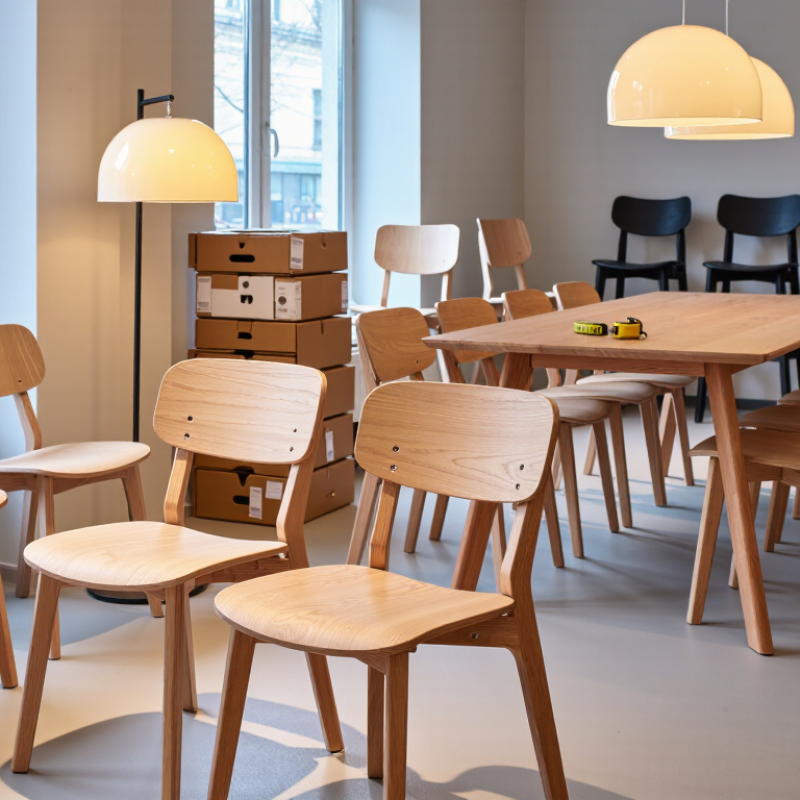
Define Buyer Requirements for Maple Chairs in 2026
Global buyers should define how maple chairs will be used before comparing prices. A dining chair needs different proportions and durability from a café or meeting chair. Specify seat height, overall width, target load, and expected daily use. Measure the table, too. A few centimeters can make a chair uncomfortable.
Ask suppliers to identify the wood species and explain how the lumber is dried and graded. Maple can provide a firm, close-grained surface, but appearance varies between boards. Request photos of actual production samples, not only polished catalog images. Check joints, underside supports, and the finish around seat edges. Small details matter. A chair may look sturdy while hiding weak connections.
Write down packaging limits, assembly needs, preferred finish, and destination-specific testing requirements. Ask for test reports that match the chair model and intended use; generic documents offer little reassurance. Compare a sample under realistic conditions, including repeated sitting and routine cleaning. I would not assume one finish suits every climate or household. That assumption is easy to make. It is also worth revisiting. Leave room in the specification for acceptable color variation, but define what counts as a defect before production begins.
How to Choose Maple Chairs for Global Buyers in 2026? — Define Buyer Requirements for Maple Chairs in 2026
| Buyer Requirement | Suggested Specification or Target | Why It Matters | What to Verify with the Supplier |
|---|---|---|---|
| Maple species and construction | Specify hard maple or soft maple by botanical or trade name, and state which chair components must be solid wood. Identify any permitted plywood or other engineered-wood components. | “Maple” can refer to different species and wood products, which may vary in color, strength, weight, and cost. | Request a bill of materials, species declaration, and confirmation of solid-wood versus engineered-wood parts. |
| Wood moisture content | Set a delivery target appropriate to the intended indoor climate; a common furniture specification is approximately 8–12% moisture content. Confirm the acceptable range for the destination market and storage conditions. | Wood can shrink, swell, or develop defects when its moisture content is unsuitable for its service environment. | Agree on the measurement method, sampling plan, and inspection timing. Request recorded readings for production or pre-shipment checks. |
| Chair dimensions and ergonomics | For a general-purpose dining chair, consider a seat height of about 430–470 mm, a seat depth of about 400–450 mm, and a clear seat width of about 450–500 mm. Confirm dimensions against the intended table and user group. | Comfort depends on the user, chair design, and table height; a stated range is a starting point, not a universal ergonomic standard. | Request a dimensioned drawing showing seat height, seat width, seat depth, overall height, and arm clearance where applicable. |
| Load capacity and structural performance | State the intended user load and chair category, then agree on appropriate strength, stability, and durability testing before production approval. | Performance requirements differ between domestic, commercial, and specialty seating. A load figure alone does not establish overall safety or durability. | Request test reports for the relevant chair type. Check whether EN 12520, ANSI/BIFMA, or another destination-market standard applies, and confirm the applicable edition and test scope. |
| Finish and appearance | Specify clear or colored finish, sheen, acceptable grain and color variation, and the surfaces that must be coated. Approve a representative production sample. | Maple has natural variation, and finish choices affect color, tactile feel, stain resistance, and the visibility of grain. | Define an approved sample and written limits for visible defects, color variation, coating coverage, and finish consistency. |
| Chemical and regulatory compliance | Identify the destination country and the requirements applicable to the finished chair, coatings, adhesives, and any composite wood components. | Import and product requirements vary by market and by material. One general declaration may not cover every component or jurisdiction. | Request relevant declarations and test documentation, and confirm that documents match the actual materials and finished product being shipped. |
| Packaging and transport protection | Specify packaging format, protective materials, carton dimensions, gross weight, stacking limits, and any export-packaging requirements for the route. | Packaging affects freight planning and helps reduce damage to legs, joints, and finished surfaces during handling and transport. | Review a packing specification and packaging sample; confirm that shipment marks and handling instructions meet the buyer’s requirements. |
| Quality inspection and acceptance | Agree on inspection stages, sampling method, defect categories, measurement tolerances, and written acceptance criteria before placing the order. | Clear criteria help buyers and suppliers assess workmanship consistently and resolve quality issues more efficiently. | Use an approved reference sample, inspection checklist, and documented pre-shipment inspection results. |
| Order planning and lead time | Confirm production quantity, sample approval date, production schedule, shipment window, and reorder expectations in the purchase agreement. | Timing depends on order size, materials, finishing, testing, and logistics; a lead-time commitment should be tied to defined milestones. | Request a written schedule that identifies dependencies, approval deadlines, and procedures for changes or delays. |
Buyer note: The dimensions and moisture-content range above are suggested starting points for specification development, not universal requirements. Confirm final targets, applicable standards, and compliance obligations for the chair design and destination market.
Related Posts
-

2026 Best Occasional Chairs for Global Buyers?
-

Hand Made Furniture Tips for Global Buyers to Consider
-
Creative Ways to Style Your Space with Unique Furniture Chair Designs
-

What Are the Top 10 Types of Lounge Benches?
-
Top 10 Stylish Furniture Stools for Modern Living Spaces?
-

2026 Top Furniture Bar Trends for Global Buyers to Consider?